How to Build a Business Case for Water Submetering in Your HOA
How much money is your HOA wasting on water usage every month? It’s probably more than you think! If you’re like most HOAs, you are probably looking for a viable solution to the problem. The good news is that there is one. Water submetering.
If you’re thinking you’ve heard it all before, you’d probably be right; however, submetering has changed drastically over the years. With modern technology, it’s surprisingly quick, easy, non-invasive, extremely affordable, and will change your NOI in ways you never thought possible.
Water submetering gives boards a way to regain control. This happens when the numbers are clear, defensible, and easy to explain. This guide walks you through how to build a business case for water submetering that boards trust and homeowners understand.
The following framework reflects real HOA board presentations and submetering implementations across communities nationwide, including Colorado’s Highlands at Stonegate North, Cobblestone Townhomes, and others, where reduced water usage, early leak detection, and improved billing transparency were achieved.
Why Boards Hesitate and How to Overcome It
Typically, HOA boards want proof before approving a capital project. That’s fair enough. So, give them what they want. Submetering touches money, fairness, and change. Your job is to show them proof of these three things.
- The financial impact is measurable.
- The risk is manageable.
- The long-term benefit outweighs the cost.
When done right, your proposal stops being theoretical and starts to look like the responsible thing to do. If you can do that, you’ve won your case!
The 10 Steps for Building a Submetering Business Case

Follow these step-by-step instructions for preparing your case.
Step 1: Establish the Baseline Water Cost
Start with facts, not opinions. Don’t include any of your personal opinions about this matter in your presentation. If you do, you could lose the case before you even begin because your presentation will sound like a personal pet project when it’s actually for the good of the community.
Collect at least 12 months of water and sewer bills. If you have two or three years, even better.
Record the following in a spreadsheet:
- Total annual water and sewer cost.
- Average monthly cost.
- Cost per unit per month.
- Year-over-year increases.
This baseline becomes your comparison point for every projection.
Pro Tip: Include sewer charges. In many municipalities, sewer costs equal or exceed water usage.
According to the EPA, water and wastewater utilities continue to raise rates to cover aging infrastructure and treatment costs, with these increases often outpacing inflation.
Step 2: Identify the Inefficiency in Shared Billing
Master-metered communities reward high usage and punish conservation. Homeowners who use less subsidize those who use more. This behavior is well documented.
It’s widely reported that when residents are billed for their own usage, consumption typically drops because price signals drive behavior.
This is the core logic behind your HOA water submetering cost benefit analysis.
Step 3: Estimate Realistic Water Savings
Avoid inflated promises. Conservative estimates build credibility.
Multiple studies show that submetering in any type of multifamily property reduces water by 15–30% or more,
For board presentations, use a range.
- Low case: 15% reduction.
- Expected case: 20% reduction.
- High case: 25% reduction.
Apply these percentages to your baseline annual cost.
Share real-world case studies to solidify your case. Here are a few you can use.
- Case Study: The Highlands at Stonegate North HOA
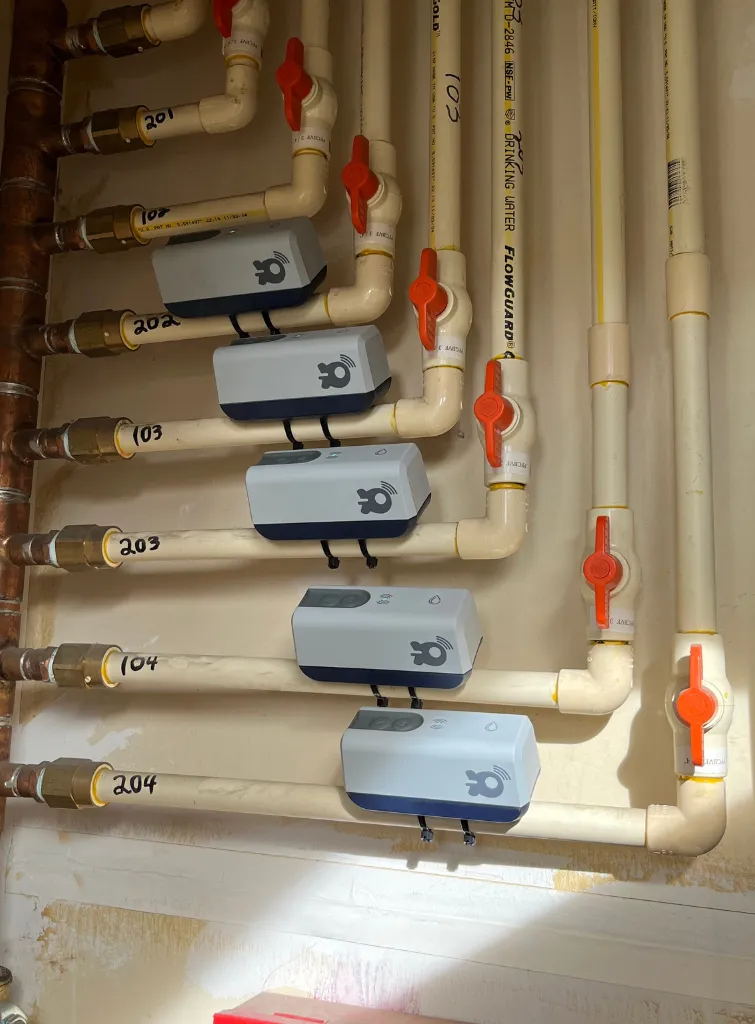
This Colorado community installed over 446 non-invasive submeters in just two months, recovered $20,000–$30,000 by correcting a city billing error, detected hidden leaks early, and gave homeowners control over their own usage and bills.
- Case Study: Cobblestone Townhomes HOA
After implementing SimpleSUB Water, this HOA significantly reduced costs by identifying leaks immediately with automated real-time alerts. The community saved $5,000+ annually, nearly recouping the system’s cost within a year while reducing the time volunteers spent chasing leaks.
- Case Study: Greentree Commons Condominiums HOA
This 83-unit community replaced unreliable meters and manual readings with SimpleSUB’s hands-free metering. This HOA saved 13,000 gallons of water each month, eliminated billing disputes, and gave the board manager back 52 Sundays per year that were previously spent on manual meter checks.
Step 4: Build a Simple Financial Model
Your spreadsheet does not need to be fancy. It needs to be clear.
Sample spreadsheet structure:
Tab 1. Current Costs
- Total annual water and sewer cost.
- Cost per unit per year.
Tab 2. Projected Savings
- Baseline cost.
- Usage reduction percentage.
- Dollar savings.
Tab 3. Submetering Costs
- Installation cost.
- Ongoing billing and service fees.
Tab 4. Net Impact
- Annual savings minus annual fees.
- Payback period.
- Five-year net benefit.
This is where water submetering ROI for HOAs becomes obvious.
Step 5. Calculate ROI and Payback Period
Boards understand ROI. Use it!
Net savings over time ÷ total investment x 100
Payback period:
Installation cost ÷ annual net savings
Keep assumptions visible. Transparency builds trust.
Step 6. Show the Fee Impact on Homeowners
This is where objections often appear.
Explain that submetering does not add cost. It reallocates cost.
Include a simple example.
- Before submetering: Flat monthly HOA fee includes water.
- After submetering: Lower HOA fee plus individual water bill.
Residents who conserve often pay less overall. Heavy users pay more. That is the point.
Step 7. Highlight Reserve and Budgeting Benefits
Submetering stabilizes budgets.
When water costs drop and become predictable, boards can plan reserves more accurately. Fewer surprise increases. Less pressure to raise dues.
This matters to long-term financial health.
Step 8. Prepare Your Board Presentation
When learning how to present water submetering to an HOA board, clarity beats volume.
Use not more than 10 slides.
Suggested flow:
- The water cost problem.
- Why shared billing fails.
- What submetering changes.
- Realistic savings ranges.
- Cost and payback.
- Homeowner impact.
- Reserve benefits.
- Risks and mitigation.
- Implementation timeline.
10. On the last slide, provide your final recommendation. But make sure you avoid technical jargon. Only focus on the outcomes.
Step 9. Address Common Concerns Head-On
Boards appreciate honesty.
Cover these points proactively.
- Installation disruption and how it is minimized.
- Meter accuracy and compliance.
- Billing disputes and customer support.
- Local regulations.
HUD recognizes submetering as a legitimate conservation and cost-control strategy in any type of multifamily housing property (including HOAs) when implemented correctly.
Step 10. Support Your Case with Trusted Resources
Internal education is also important. Link to detailed guides for board members who want more in-depth information.
Here are some reputable resources you can provide.
- Water Submetering for HOAs: The Complete Guide
- Step-by-Step Checklist for Implementing a Water Submetering System
- The Ultimate Guide to Water Submetering
- Any other handouts or information you have gathered that will help you make your case.
These help reinforce authority and reduce uncertainty.
FAQs

Here are some of the most commonly asked questions about HOA submetering. You can provide these FAQs as part of your presentation, including any other questions you think might come up.
1. Does submetering increase HOA liability?
No. When professionally installed and managed, liability is not increased. Billing systems include dispute resolution and compliance safeguards.
2. How long does installation take?
For most communities, the installation is completed in phases to reduce disruption. Timelines depend on building layout. However, here is a step-by-step water submetering overview of how it all works.
3. Will homeowners push back?
Some might initially. Education and transparent math help reduce resistance quickly.
4. Is submetering legal everywhere?
Most states allow it, but rules vary. Always check and confirm your local guidelines.
5. Can boards reverse the decision later?
Yes. But most do not once the savings and fairness become visible.
Are You Ready to Take Control of Your HOA’s Water Costs?
If your HOA is facing rising water costs, now is the time to run the numbers and decide how best to handle those costs based on facts, not fear.
Contact SimpleSUB Water Today.
If you want more information first, download the following resources:
Water Submetering for HOAs: The Complete Guide
Step-by-Step Checklist for Implementing a Water Submetering System
The Ultimate Guide to Water Submetering
*This blog post was written by water submetering specialists at SimpleSUB Water, a provider of unit-level water metering solutions for HOA and other residential and commercial properties across the U.S.
DISCLAIMER: The information provided in this guide is for general educational and informational purposes only. It is not intended as legal, financial, or engineering advice, nor should it be relied upon as a substitute for professional consultation. Property owners and managers should consult with qualified experts, local authorities, and licensed contractors before making decisions regarding water submetering, tenant water billing, or related utility management practices. SimpleSUB Water makes no representations or warranties, expressed or implied, about the accuracy, completeness, or applicability of the content in specific situations. All utility regulations, building codes, and compliance requirements vary by jurisdiction and are subject to change.
Sources and Further Reading:
https://www.epa.gov/sustainable-water-infrastructure/effective-water-utility-management-practices
https://www.simplesubwater.com/resources/how-usage-based-water-billing-pays-off
https://www.simplesubwater.com/resources/5-ways-to-cut-water-costs-and-increase-noi
https://www.simplesubwater.com/resources/water-submetering-for-hoas-the-complete-guide
https://www.simplesubwater.com/how-it-works
https://www.awwa.org/resource/water-conservation/
https://naahq.org/news/improving-returns-and-esg-metrics-through-multifamily-submetering
https://www.mrisoftware.com/blog/how-to-submeter-water-in-a-multifamily/
https://www.verifiedmarketreports.com/product/residential-water-submetering-market/
https://19january2017snapshot.epa.gov/www3/watersense/pubs/indoor.html
https://www.investopedia.com/terms/r/returnoninvestment.asp
https://www.investopedia.com/articles/basics/10/guide-to-calculating-roi.asp
Request a Demo
We'll design an affordable, easy-to-install solution for your submetering project, large or small.