Every unexplained spike in your water bill is a signal that your metering system might be costing you more than you think. Choosing the right water submetering technology affects billing accuracy, maintenance demands, and tenant trust. Whether you’re installing a system for the first time or upgrading outdated meters, understanding your options is an important step in the process.
This guide explains how to evaluate inline, over-the-pipe, and wireless water submetering technologies so you can choose the best fit for your park’s layout, climate, and long-term goals.
For broader context, see Water Submetering for Mobile Home Parks: The Complete Guide.
What Is Water Submetering and Why Is It So Important?
Water submetering installs individual meters at each home or lot to measure actual usage. Under a master-meter system, the park receives a single bill and typically spreads the cost evenly among all tenants. That approach hides overuse, rewards waste, and creates recurring billing disputes.
Here’s a true story.
We know of a family whose children didn’t have hot water in their own home. So, they routinely went to their parents’ home, which was located in a mobile home park, and the entire family of six showered, did laundry, and used the kitchen. When the park was on a master-metered system, the entire community was unknowingly paying for this family's excessive water use. This might sound extreme, but you would be surprised how often similar events occur.
Submetering restores accountability. When tenants see their own water consumption, usage often drops because leaks and inefficient habits become visible. Industry guidance from the American Water Works Association (AWWA) notes that customer-level metering plays a critical role in water conservation and demand management, particularly in systems facing rising rates and aging infrastructure.
Submeters also help operators identify leaks earlier, improve transparency, and protect operating margins as utility costs continue to rise.
Core Factors to Consider Before Choosing Technology
Before selecting a system, evaluate a few fundamentals.
Park Layout
Centralized plumbing behaves very differently from long lateral lines feeding scattered homes.
Climate Exposure
Freeze risk directly affects meter longevity and maintenance frequency.
Installation Access
Some parks lack accessible shutoff points, making invasive installs costly.
Budget Horizon
Upfront price is important, but lifecycle costs are even more important. In older parks built before the 1990s, access constraints and undocumented plumbing often shape technology choice as much as budget.
Inline Submetering Technology
Inline meters are installed directly into the water line and measure flow as water passes through the pipe.
Pros:
- High measurement accuracy
- Strong fit for centralized plumbing systems
- Long service life when properly installed
Cons:
- Installation requires cutting into pipes
- Higher labor costs and temporary service disruption
- Increased freeze exposure if improperly insulated
Many modern inline meters use ultrasonic sensing, which reduces wear compared to mechanical designs. These systems perform well in parks where plumbing access is predictable, and freeze protection can be reliably maintained.
Over-the-Pipe (Clamp-On/External) Submeters
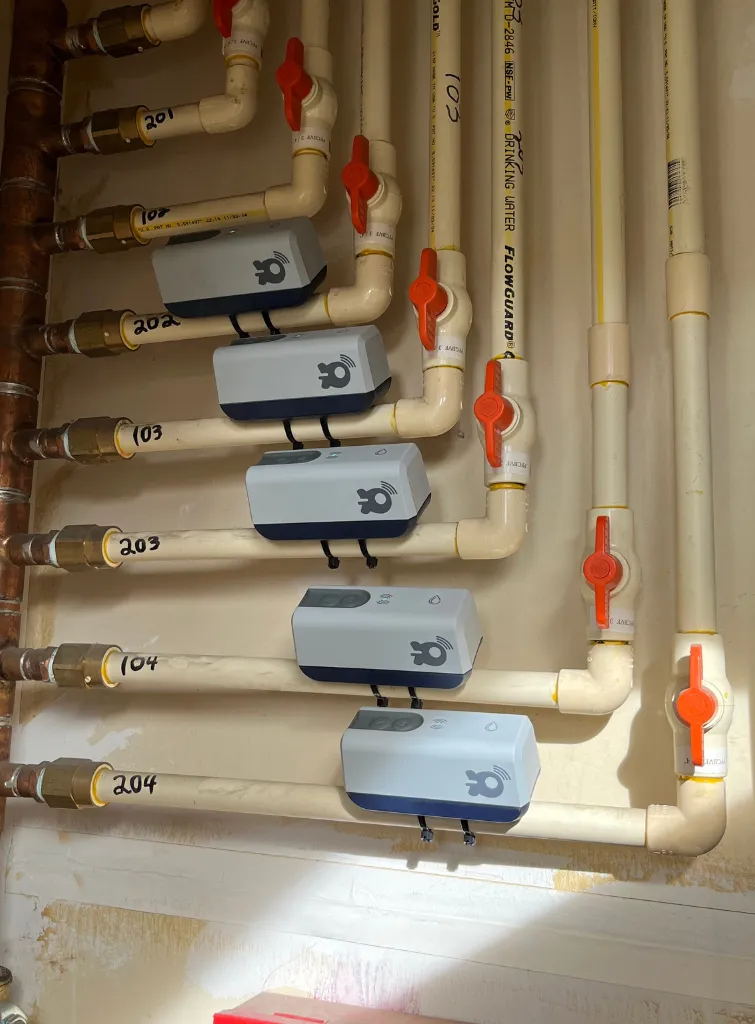
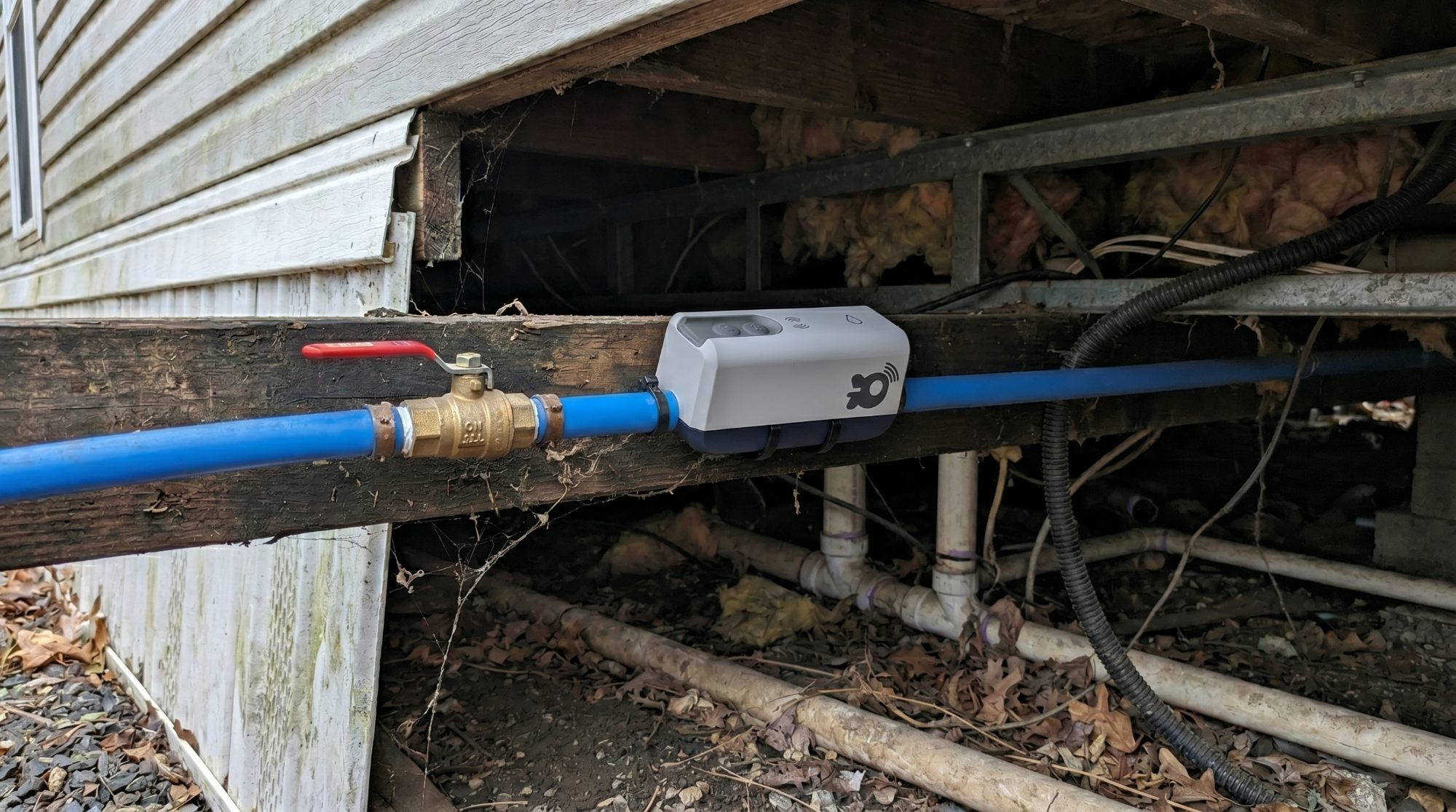
Clamp-on submeters attach to the exterior of existing pipes and use ultrasonic sensors to measure flow without having to shut off the water or cut the pipes.
Pros:
- No pipe cutting or water shutoffs
- Faster, less disruptive installation
- Lower freeze risk since no water enters the meter
Cons:
- Accuracy depends on proper sensor alignment
- Pipe material can affect performance
- Periodic calibration might be required
In cold-weather regions like the Midwest and Northeast, external meters are often preferred for retrofit projects because they reduce freeze-related failures while keeping installation timelines short.
Cellular Water Submetering Solutions
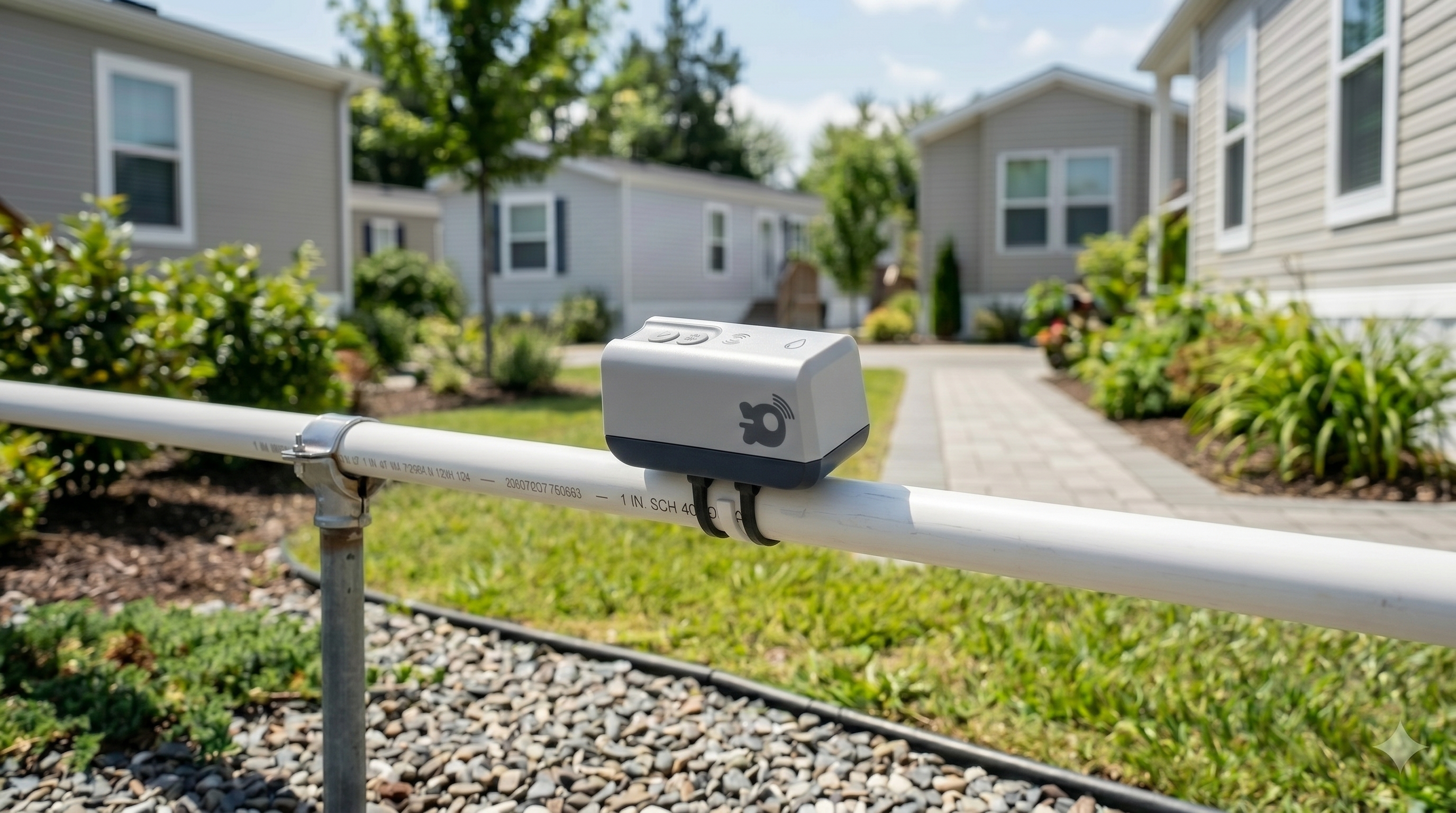
Wireless systems transmit usage data remotely through cellular or radio networks to a secure online dashboard.
Pros:
- Remote reads and automated leak alerts
- No on-site wiring infrastructure
- Reduced labor for ongoing meter reads
Cons:
- Ongoing data or service fees
- Signal strength varies by location
- Outdoor units require weather-rated enclosures
Wireless systems work especially well in large or spread-out parks where manual reads are inefficient. Many operators value the ability to detect continuous flow events without visiting the site.
How Park Layout Influences Technology Choice
Layout directly affects performance and cost.
- Spread-out parks often benefit from wireless systems
- Dense clusters support inline or clamp-on meters
- Retrofit environments favor non-invasive installations
Aligning technology with layout reduces installation friction and simplifies long-term maintenance.
Freeze Risk and Extreme Weather Climate Considerations
Cold climates demand planning. Inline meters that hold water are at higher risk of freezing unless installed indoors or in a heavily insulated location. Clamp-on sensors avoid internal freezing and often perform better in winter conditions. Wireless devices require weather-rated housing and batteries designed for temperature swings.
Regardless of the technology, insulation, and heat tracing (where appropriate), seasonal inspections significantly extend meter life.
Cost Breakdown and ROI Expectations
Total cost includes equipment, labor, maintenance, and data services. Inline meters typically carry higher upfront costs but deliver strong accuracy. Clamp-on and wireless systems reduce labor and disruption.
Many mobile home parks recover submetering investments within one to two years through reduced water usage and fair, usage-based billing.
For planning guidance, review the Step-by-Step Checklist for Implementing a Water Submetering System.
Implementation and Best Practices
Begin with a site audit to map plumbing and access points. Work with installers experienced in mobile home parks. Communicate clearly with tenants before rollout. Plan for routine maintenance and data review. Dashboards and alerts help prevent minor leaks from becoming major losses.
FAQs for Water Submetering in Mobile Home Parks
Here are the most commonly asked questions about submetering in mobile home parks.
1. What water submetering technology is the most accurate?
Ultrasonic technology typically provides the highest accuracy.
2. Are wireless water submeters reliable?
Yes, when installed with adequate signal coverage and weather protection.
3. Does water submetering reduce water usage?
Yes. Usage-based billing consistently reduces consumption.
4. Can meters be installed without shutting the water off?
Clamp-on meters allow installation without shutting the water off or cutting the pipes.
5. How fast can mobile home parks see ROI?
Many mobile home parks break even within 12–24 months.
What’s Next?
If you’re ready to reduce water waste and regain control of utility costs, Contact SimpleSUB Water for a customized submetering assessment. For more in-depth information, you can review our Water Submetering for Mobile Home Parks: The Complete Guide.
-----------------------------------------------------------------------------------------------------------------------
*This blog post was written by water submetering specialists at SimpleSUB Water, a provider of unit-level water metering solutions for mobile home parks and other residential and commercial properties across the U.S.
Disclaimer: This content is for informational purposes only and does not constitute legal, engineering, or regulatory advice. Submeter requirements and billing rules vary by state and municipality. Always consult qualified professionals and local regulations before installation.
Sources and Further Reading:
https://www.simplesubwater.com/resources/water-submeters-for-mobile-home-parks
https://www.simplesubwater.com/resources/water-submetering-for-mobile-home-parks-the-complete-guide
https://www.awwa.org/policy-statement/metering-and-accountability/
https://www.simplesubwater.com/resources/ultimate-guide-to-water-submetering
Request a Demo
We'll design an affordable, easy-to-install solution for your submetering project, large or small.