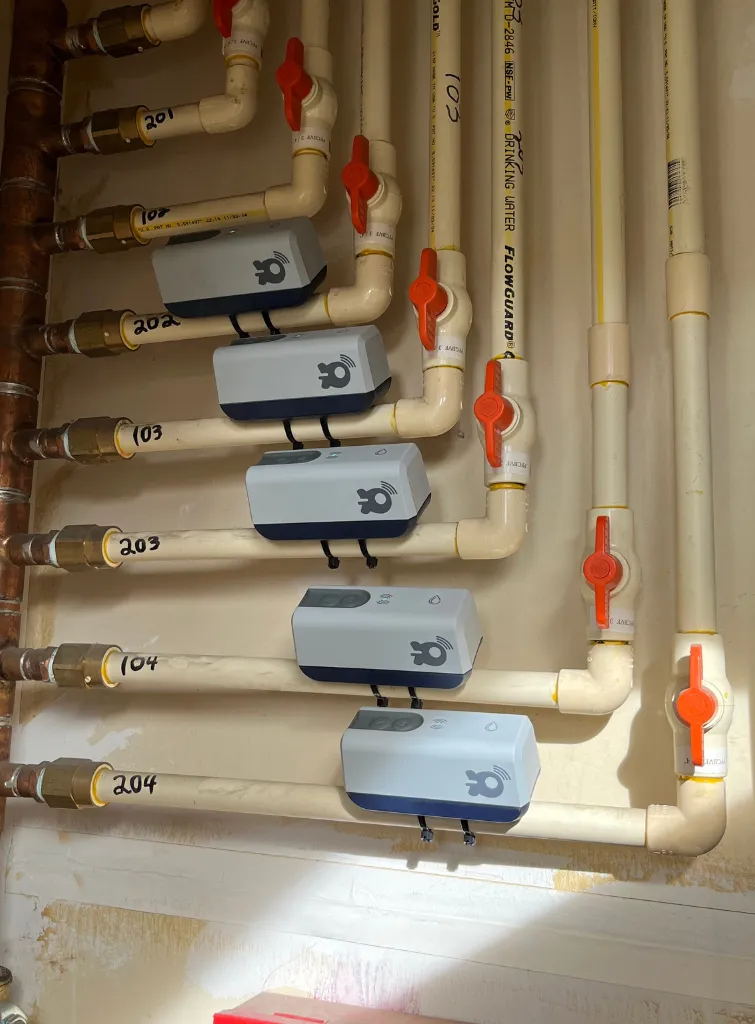
Imagine shaving 30% off your community’s annual water bill without cutting services, imposing fees, or raising dues. That’s not a dream. It’s what many HOAs experience when they install water submeters that measure consumption at the unit level. Submetering helps boards see exactly where water is going, detect leaks quickly, and turn unpredictable line items into manageable costs.
If your board struggles with budgeting volatility, unexpected water costs, or weak reserve planning, this article explains how submetering can help you take control. You’ll learn where savings come from, how this technology impacts your finances, and what real HOAs have achieved.
And yes, we’ll also link you to tools that make implementation easier!
Before we dive in, keep in mind that the foundation for smart water budgeting starts with data, not guesswork. That’s exactly what submeters deliver.
Why Water Costs Blow HOA Budgets
Many HOAs share a single master water meter across all units and common areas.
That means:
- No unit-level usage data exists.
- Everyone pays the same collective bill.
- Waste and leaks go unnoticed.
- Budgets fluctuate with weather, irrigation use, and hidden issues.
Without visibility, boards must budget based on last year’s bill, guesswork, or seasonal adjustments.
That leads to:
- Unexpected spikes.
- Underestimated water cost line items.
- Less money available for reserves.
- Higher dues or special adjustments.
This unpredictability is a big reason many communities fall short on their reserve funding goals.
What Water Submetering Changes in a HOA Budget
Submetering enables more accurate cost allocation. When you install submeters that track each unit’s water use, the board gains clarity. Instead of dividing a single large water bill among all homeowners, do the following.
- Identify true usage patterns.
- Hold individual users accountable.
- Allocate costs fairly and transparently.
This improves tenant satisfaction and reduces hidden operating costs buried in budgets.
This shift is critical because it enables boards to plan their finances using actual data rather than estimates. When usage is metered and billed accurately, variability drops and monthly water budgeting becomes far more predictable.
How Water Submetering Affects HOA Budgets
A major benefit of submetering is that it reduces waste and stabilizes utility costs. Studies and real-world cases show that when homeowners can see their usage and pay based on actual consumption, the following occurs.
- Water usage drops by 15–30% or more because homeowners conserve water when they know it affects their bill.
- Hidden leaks are detected and repaired sooner because meters flag abnormal use.
- Operational efficiency improves as billing disputes and manual meter reading time disappear.
This financial clarity pays dividends in an HOA budget.
Real HOA Case Studies
.png)
Here are two real HOA case studies that demonstrate what's possible.
Highlands at Stonegate North
At Highlands at Stonegate North in Colorado, a 446-unit HOA, installing submeters made a dramatic impact.
- Water use dropped 38% in two months.
- HOA recovered $20,000–$30,000 by correcting a misread city meter.
- Homeowners saved $50–$70 per month on their individual bills.
Board members credited submetering with giving homeowners control over usage and reducing overall community expenses.
Greentree Commons Condominiums
Greentree Commons in Virginia, an 83-unit HOA, no longer spends entire days managing water-related issues. The impact of installing SimpleSUB Water meters has been transformational.
- 13,000 gallons of water saved per month through leak detection.
- 52 days reclaimed annually.
- The meters are no longer manually checked.
- Consistent, dispute-free billing based on accurate, real-time usage.
- Happier homeowners and a more sustainable community.
- Community no longer depends on guesswork or third parties.
These cases help illustrate how water expenses no longer have to be a wildcard in HOA budgets.
Reserve Planning Gets a Boost
Now let’s tie this back to reserve planning, which is often one of the toughest parts of HOA finance.
Reserve funds are designed for long-term repairs and replacements, such as roofs, pumps, and plumbing lines. When operating budgets are tight or unpredictable, boards often underfund reserves, putting the community at risk.
Here’s how submetering helps:
1. Predictable Utility Expenses Mean Stronger Reserves
When utility costs are volatile, boards may hesitate to allocate funds to reserves for fear of missing operating budget targets. With submeters, many variable water costs shrink or disappear because consumption is monitored, tracked, and billable at the unit level. Suddenly, operating costs become stable, and reserve contributions can be planned with confidence.
2. Early Leak Detection Protects Infrastructure
Water leaks harm both budgets and infrastructure. Submeters quickly detect abnormal usage, enabling boards to address issues before they result in large repair bills. That protects reserve funds and extends equipment life.
3. Better Forecasts for Long-Term Planning
Reserve studies should be updated every few years and must include all major expected expenses, including those related to water infrastructure. Submeter data provides boards with real patterns to base those studies on, rather than last year’s estimates. When usage forecasts are precise, reserve planners can set contributions at appropriate levels without overfunding or underfunding.
This is where thoughtful boards move from reactive budgeting to proactive financial stewardship.
How to Start Your Water Submetering Venture
If you’re considering submetering for your HOA, here’s a clear path forward.
- Audit Your Current Water Usage – Understand where your money is being spent today.
- Explore Submeter Options – Different technologies exist. Some installations do not require cutting the pipes.
- Plan Installation Costs Against Lifetime Savings – Many communities see payback in just a few years.
- Integrate Submeter Data into Budget Forecasts – Use the data in your next budgeting cycle.
For more specific HOA water submetering information, see the Water Submetering for HOAs: The Complete Guide.
For a hands-on approach, check out the Step-by-Step Checklist for Implementing a Water Submetering System.
And for a deeper understanding of submetering in general, see The Ultimate Guide to Water Submetering.
FAQs

Here are the most commonly asked questions about HOA water submetering.
1. Will submetering really reduce my HOA's overall water costs?
Yes. Many communities see unit-level usage drops of 15–30% because homeowners adjust their behavior, and leaks are repaired more quickly.
2. Does submetering help with reserve planning?
Absolutely! Stable utility costs and leak avoidance protect reserve funds and improve long-term financial forecasts.
3. Do homeowners resist submetering?
Some do at first, but clear communication about fairness and accountability usually wins support. Many boards include submetering benefits in their community messaging.
4. How quickly do communities see a return on submetering?
Many HOAs notice savings in a year or less. Some cases project multi-year savings far exceeding installation costs.
5. Does submetering require major plumbing work?
Not always. Some modern meters are installed non-invasively without cutting pipes. Technology today allows easy deployment with minimal downtime and fast setup. See how the submetering installation works, step by step.
Are You Ready to Take Control of Your Water Costs?
If you’re ready to take control of your water costs and improve your HOA budgeting and reserve planning, you can get started today! Contact SimpleSUB Water for a quick and easy community assessment.
Don’t forget to Download your Water Submetering for HOAs: The Complete Guide to learn more and see how submetering can help you meet or exceed your community goals.
The sooner you install your submeters, the sooner you’ll see the savings!
*This blog post was written by water submetering specialists at SimpleSUB Water, a provider of unit-level water metering solutions for HOA and other residential and commercial properties across the U.S.
DISCLAIMER: The information provided in this guide is for general educational and informational purposes only. It is not intended as legal, financial, or engineering advice, nor should it be relied upon as a substitute for professional consultation. Property owners and managers should consult with qualified experts, local authorities, and licensed contractors before making decisions regarding water submetering, tenant water billing, or related utility management practices. SimpleSUB Water makes no representations or warranties, expressed or implied, about the accuracy, completeness, or applicability of the content in specific situations. All utility regulations, building codes, and compliance requirements vary by jurisdiction and are subject to change.
Sources and Further Reading:
https://www.simplesubwater.com/resources/ultimate-guide-to-water-submetering
https://www.simplesubwater.com/resources/colorado-hoa-submetering-case-study
https://www.simplesubwater.com/how-it-works
https://www.simplesubwater.com/resources/taking-water-billing-from-a-headache-to-totally-seamless
https://www.simplesubwater.com/resources/philadelphia-water-submetering-case-study
Request a Demo
We'll design an affordable, easy-to-install solution for your submetering project, large or small.