.jpeg)
This article was prepared by the SimpleSUB Water team in collaboration with water submetering specialists who support homeowner associations and multifamily properties across the U.S. The insights shared in this article are drawn from real-world retrofit projects in which unit-level submetering was installed in existing buildings with varying plumbing layouts, occupancy profiles, and water requirements.
If your homeowners’ association (HOA) is spending tens of thousands of dollars each year on shared water bills with no idea who’s using what, that inefficiency wastes real money and erodes your community's trust and goodwill.
Homeowner associations across the U.S. are discovering that smart, retrofit water submetering technology can transform how they manage water usage, detect leaks, and allocate costs fairly. Forward-thinking boards are moving away from flat assessments like Ratio Utility Billing Systems (RUBS) and outdated meters toward precise, low-disruption systems that deliver actionable data.
This article explains how modern submetering works, why ultrasonic and LTE-connected devices are so important, and how these technologies help HOAs control costs while improving transparency.
How Modern Water Submetering Technologies Work
Traditional HOA water billing relies on a single master meter. Every household pays the same share, regardless of actual consumption. Submetering changes that model by measuring usage at the unit level.
Modern systems track water flow for each residence and transmit that data to a cloud platform. Implementation details reflect real retrofit constraints, including mixed pipe materials, limited access points, occupied units, and coordination with property managers to minimize resident disruption and scheduling conflicts.
Boards and property managers gain visibility they never had before. According to the Environmental Protection Agency (EPA), submetering supports faster leak detection and better operational decisions.
In retrofit environments, these data insights often reveal issues that were previously invisible under master-meter billing, including slow leaks, incorrect municipal meter readings, and uneven usage patterns across identical units.
When HOAs move to submetering, they typically see:
- Clear accountability for individual water use.
- Faster identification of leaks and abnormal flow.
- More accurate billing aligned with actual consumption.
- Measurable reductions in overall water demand.
A Colorado HOA case study documented a 38% drop in water usage in just two months once residents could see their own usage data. In addition, they recovered a $20,000–$30,000 refund after correcting a misread city meter. Additionally, residents saved an average of $50 to $70 per month.
For a deeper overview of planning, see Water Submetering for HOAs: The Complete Guide.
Ultrasonic, Over-the-Pipe Submeters
Ultrasonic submetering technology measures water flow using sound waves rather than mechanical components. That design improves accuracy and reduces maintenance requirements.
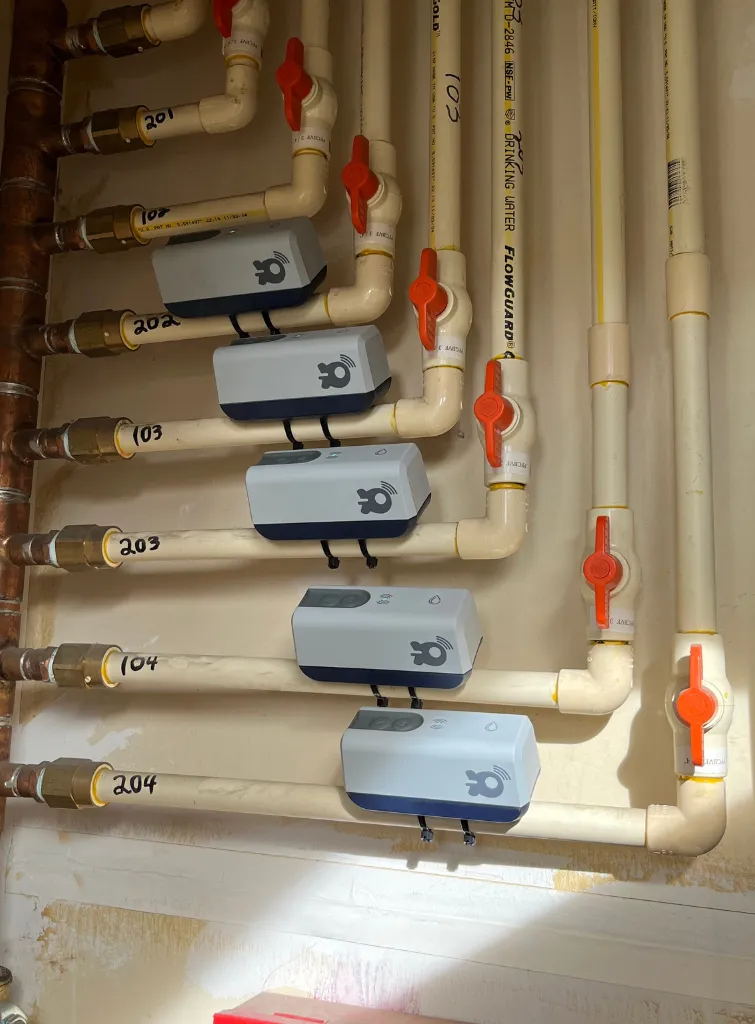
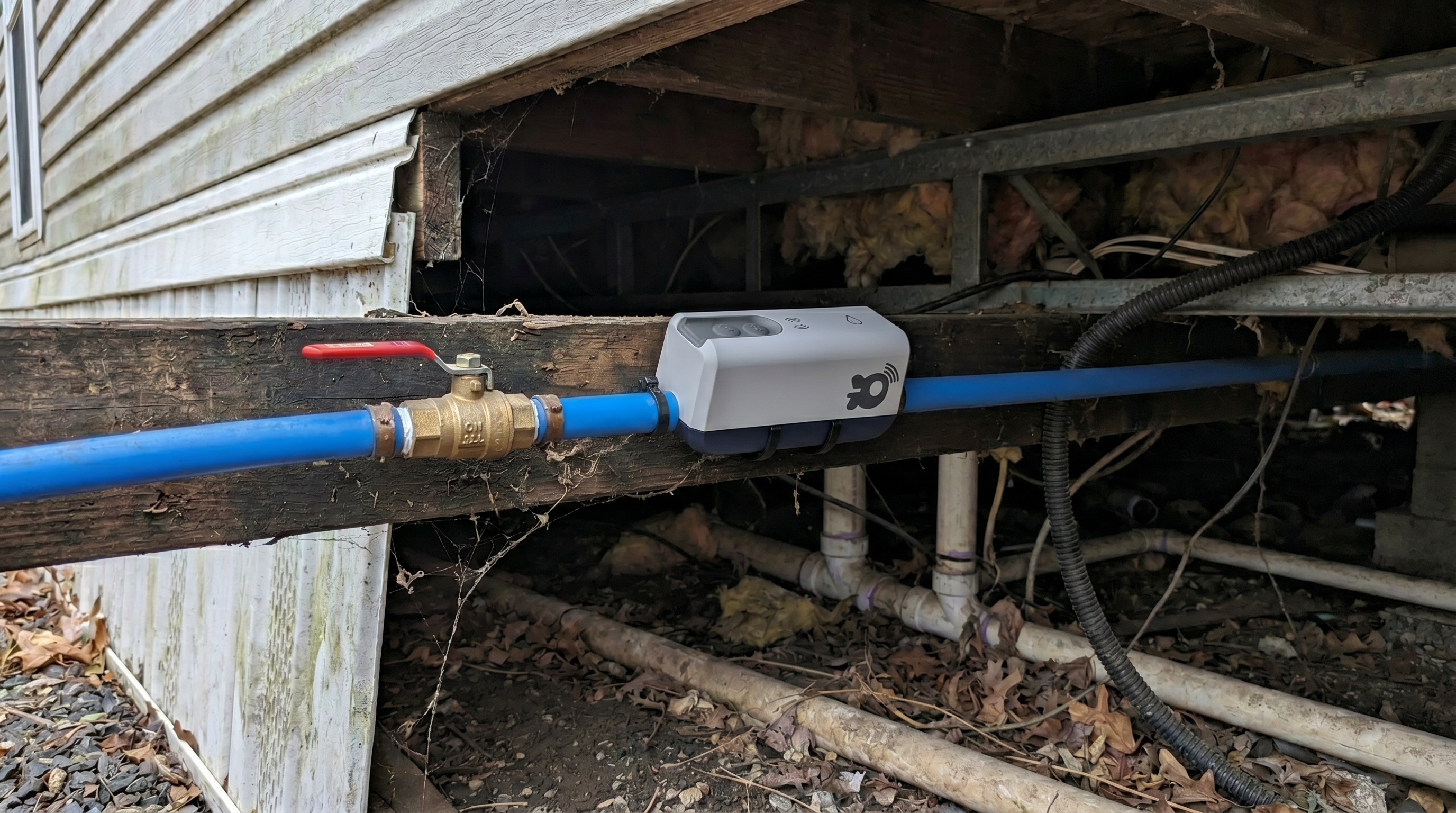
Modern ultrasonic systems support retrofit installations without cutting into the plumbing. These non-invasive water submeters for HOAs attach externally to existing pipes, avoiding structural changes.
The biggest advantages of ultrasonic, clamp-on meters include:
- No pipe cutting or water shutoffs.
- Faster installation times per unit.
- Reduced labor and permitting costs.
- Long-term accuracy without mechanical wear.
For boards evaluating an ultrasonic submetering retrofit HOA strategy, these systems reduce risk while delivering reliable data.
LTE-Connected Devices
Measurement alone has limited value without timely access to data. LTE-connected devices transmit water usage over cellular networks, eliminating the need for onsite networks or manual meter reads.
With cellular connectivity, HOAs gain real-time visibility into water activity. Boards and managers can monitor trends, receive alerts, and act quickly.
LTE-connected systems support:
- Real-time leak alerts.
- Remote meter reading.
- Faster issue resolution.
- Reduced operational overhead.
For multifamily properties, cellular-connected water submeters for condos and other HOA properties provide scalable data access without complex infrastructure upgrades.
High Accuracy and Long Lifespan
Billing accuracy directly affects resident trust. Ultrasonic and digital submeters deliver consistent readings at low and high flow rates, including small flows that indicate early leaks.
Because these systems lack moving parts, they typically offer longer service life and lower maintenance needs than traditional mechanical meters.
Documented benefits of modern smart submeters include:
- Reduced calibration requirements.
- Lower replacement frequency.
- Fewer billing disputes.
- Stronger long-term ROI.
According to a case study of a 450-unit building retrofit done by the National Apartment Association (NAA), the property saw a $180,000 increase in NOI after submetering. This outcome reflects a large-scale retrofit scenario. Results vary based on property size, baseline water usage, local utility rates, and resident consumption behavior.
Accurate, transparent data also supports conservation. Research cited by ScienceDirect shows that households using smart meters with feedback reduced daily water use by 6.2%. This reduction was observed in a residential setting where real-time or near-real-time usage feedback was provided to homeowners.
Minimal Disruption During Installation
Installation concerns often slow HOA decision-making. Modern submetering systems significantly reduce disruption compared to traditional plumbing retrofits.
Non-invasive ultrasonic meters typically take about 10 minutes per unit to install and require no water shutoff.
That streamlined process delivers several practical benefits:
- Shorter project timelines.
- Lower labor costs.
- Fewer resident complaints.
- Reduced risk to existing infrastructure.
A Colorado HOA case study in Parker County shows the property launched a pilot project with SimpleSUB Water. The water audit uncovered 17 costly leaks that wasted $63,000 a year. Leak losses were identified through continuous flow data and abnormal usage patterns flagged by the submetering system during the pilot period.
Large buildings can often complete full installations in days rather than weeks. This efficiency simplifies project coordination and minimizes ongoing management demands.
Boards preparing for implementation can use this planning resource: Step-by-Step Checklist for Implementing a Water Submetering System.
FAQs about Water Submetering for HOAs

Here are the most commonly asked questions about water submetering in HOA communities.
1. What does submetering change for HOAs?
It assigns water charges based on actual usage, improving fairness and often reducing total consumption.
2. Can these systems detect leaks automatically?
Yes. Modern submeters quickly flag abnormal flow patterns, enabling faster response.
3. Is retrofit installation disruptive for residents?
Non-invasive systems typically avoid water shutoffs and structural work.
4. How long does ROI usually take?
Many HOAs see payback within months through reduced consumption and corrected billing. The payback period will vary depending on the property type, up-front costs, utility rates, existing usage/waste, and resident behavior.
5. Do submeters need building-wide wiring?
Most modern systems use wireless or cellular connectivity instead.
What’s Next?
Shared water billing creates unnecessary waste and frustration. Modern submetering gives HOAs control, transparency, and defensible cost allocation. Contact SimpleSUB Water today to explore a retrofit-ready solution that will help reduce expenses, detect leaks sooner, and modernize your community’s infrastructure.
*This blog post was written by water submetering specialists at SimpleSUB Water, a provider of unit-level water metering solutions for HOA and other residential and commercial properties across the U.S.
DISCLAIMER: The information provided in this guide is for general educational and informational purposes only. It is not intended as legal, financial, or engineering advice, nor should it be relied upon as a substitute for professional consultation. Property owners and managers should consult with qualified experts, local authorities, and licensed contractors before making decisions regarding water submetering, resident water billing, or related utility management practices. SimpleSUB Water makes no representations or warranties, expressed or implied, about the accuracy, completeness, or applicability of the content in specific situations. All utility regulations, building codes, and compliance requirements vary by jurisdiction and are subject to change.
Sources and Further Reading:
https://www.simplesubwater.com/resources/colorado-hoa-submetering-case-study
https://www.simplesubwater.com/resources/water-submetering-for-hoas-the-complete-guide
https://www.simplesubwater.com/how-it-works
https://naahq.org/news/improving-returns-and-esg-metrics-through-multifamily-submetering
https://www.sciencedirect.com/science/article/pii/S0928765525000247
https://get.simplesubwater.com/hoa-meta
Request a Demo
We'll design an affordable, easy-to-install solution for your submetering project, large or small.