Most multifamily properties overpay for water every month because their billing fails to capture real, unit-level usage. In properties with shared meters, owners often absorb unnecessary costs while usage patterns remain hidden. This article explains how multifamily water submetering works from installation through ongoing billing.
Water is one of the largest controllable expenses in multifamily real estate, but most owners still recover those costs using outdated or unfair methods like the Ratio Utility Billing System (RUBS). Submetering (installing meters for each unit) changes the model by making each resident pay for what they actually use.
This often leads to dramatically lower consumption, more accurate cost recovery, and happier tenants. In fact, properties that implement water submeter systems commonly see 15–30% (or more) reduction in usage, benefiting both sustainability and the bottom line.
Below, you’ll learn the entire process of multifamily water submetering installation to billing, step-by-step, with real-world best practices. This will help you confidently implement a system that increases transparency and profitability.
Plan (Site Audit)
Before installing submeters, you must thoroughly plan and audit your property. This foundational step identifies where meters will go and ensures you choose a system tailored to your infrastructure.
A site audit typically includes the following:
- Mapping existing water lines and identifying unit service lines.
- Determining whether hot and cold lines need metering.
- Identifying potential compliance concerns with local regulations.
A proper audit helps you estimate installation complexity and total cost. When a property has hard-to-access or undocumented plumbing changes (both common in older buildings), the audit might reveal challenges that affect your equipment, installation strategy, and methodology selection, ensuring your plan aligns with reality rather than theory.
Prepare
Once you’ve completed the site audit, preparation begins. This phase bridges planning and physical work and includes several essential tasks.
- Assess Regulations
Review local laws and utility requirements. Some cities or states require submeters to be certified or installed by licensed plumbers if you plan to use the readings for tenant billing.
- Develop a Budget
Submetering involves an upfront investment, from purchasing the meters to the installation labor. However, the savings from correct billing start immediately, and ROI often occurs within the first year.
- Communicate with Tenants Early
Notify tenants about the upcoming change well before installation. Transparency here builds trust and reduces resistance once billing begins.
Choose System Partner
Selecting the right partner is extremely important. Not all submetering systems or vendors are created equally, and choosing wisely can save time and money.
What to consider:
- Accuracy and Reliability – A precise meter ensures fair billing and reduces disputes.
- Support and Onboarding – A good partner will assist with setup, training, and customer service.
- Billing Automation – Systems that integrate readings directly into billing platforms simplify monthly operations.
- Leak Detection and Monitoring – If the system offers alerts for unusual usage patterns, you’ll catch leaks earlier.
Many property owners benefit from turnkey vendors that handle everything from installation to ongoing billing, so your internal team isn’t left to manage the new system alone.
Installation
With your site audited, preparations complete, and a system partner chosen, it’s time to proceed with the installation. This is where the work gets physical and where all your planning pays off.
Submeters can be installed using several proven approaches, depending on pipe access, building layout, and long-term maintenance goals. Modern systems are designed to minimize disruption while maintaining accuracy and compliance.
The two most common submeter options:
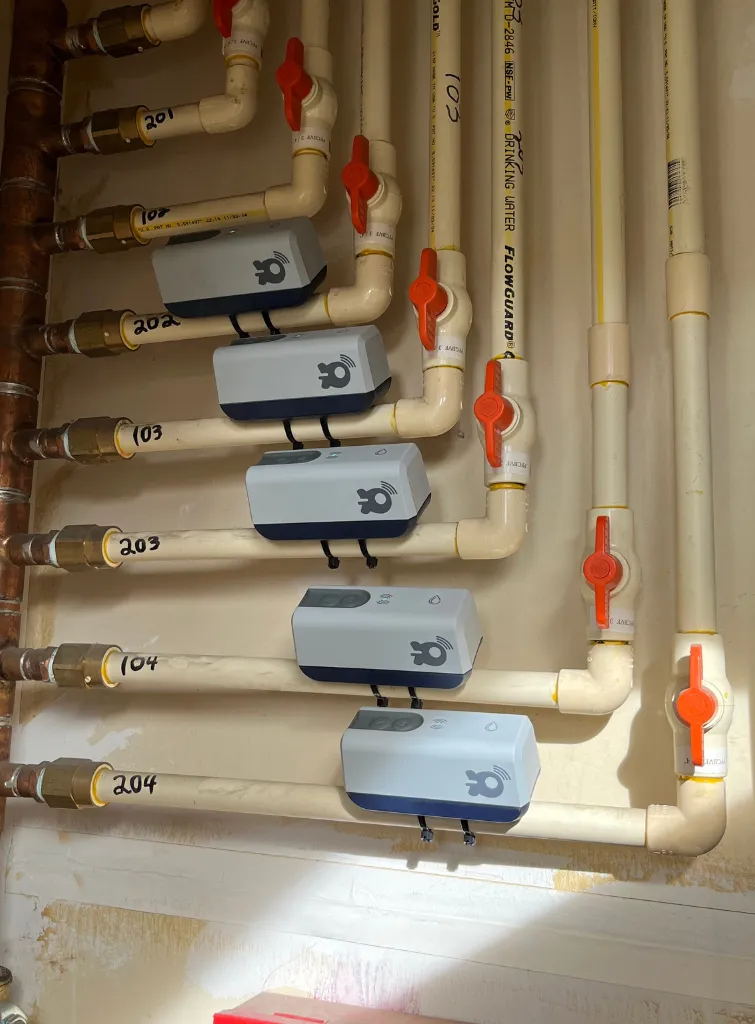
- Clamp-On Over-the-Pipe (Non-Invasive) Meters – These go around the existing pipes without cutting them.
- Standard Inline Meters – These cut the pipe and replace a section of it for direct reading.
Either way, a professional plumber typically installs submeters at the point where each unit draws water. This ensures individual usage is accurately measured. Some technologies can even operate with cellular connectivity, removing dependency on property Wi-Fi networks.
Every installation project should be thoroughly documented. Take photos, label the equipment, and update your utility infrastructure records so future maintenance or troubleshooting is seamless.
Test Meters
Once installed, the meters must be tested to confirm accuracy.
Testing ensures:
- Meters read correctly immediately after installation.
- Data flows properly to your billing system.
- Units aren’t double-billed or unmetered.
A short test period (usually 1–2 billing cycles) helps you identify misconfigurations before you charge tenants. If errors are detected, fix them before integrating the data into tenant invoices. An ounce of verification upfront prevents confusion and disputes later.
Set Up Billing and Tenant Communications
This stage marks the transition from installation to actual billing operations.
Billing Setup:
- Import meter readings into your billing software.
- Set rates, billing cycles, and any administrative fees.
- Establish procedures for the distribution of bills and payment processing.
Tenant Communication:
Good communication here is essential. Provide your tenants with the following.
- Clear expectations of how they will be billed. Providing your tenants with a sample bill will help them understand the billing process. It will also help reduce tenant phone calls, emails, and questions.
- Billing calendars and deadlines.
- Guidance on accessing their individual meter data.
Many submetering systems include tenant portals that let tenants view their consumption, which encourages conservation by linking behavior directly to cost.
Monitor and Optimize
Your work isn’t over once tenants start getting bills. A successful system requires ongoing monitoring and optimization.
Important tasks:
- Review monthly usage trends to spot anomalies.
- Use alerts to find and fix leaks quickly.
- Evaluate the impact of submetering on overall consumption.
- Adjust communications to help tenants reduce waste.
Properties that actively monitor usage tend to see even greater reductions in water use over time, boosting both sustainability and tenant satisfaction.
Stay Compliant
Billing tenants for water usage brings legal responsibilities.
Compliance includes:
- Ensuring all submeters meet local standards.
- Billing tenants at rates that conform to state and local regulations.
- Providing documentation when requested by authorities or tenants.
For example, local ordinances might require you to keep records of meter accuracy checks or provide detailed usage histories upon tenant request.
Stay informed and consult legal counsel to maintain compliance and avoid penalties.
FAQs about Multifamily Water Submetering

Here are some of the most commonly asked questions about multifamily water submetering.
1. What is water submetering?
Water submetering installs individual meters for each unit, so tenants pay based on their actual usage rather than estimates or flat fees.
2. How much can properties save with water submetering?
Many multifamily properties see 15–30% (or more) reductions in total usage after submetering is implemented.
3. Do water submeters have to be certified?
In many places, like California, submeters must be certified and installed by licensed professionals if they’re going to be used for legal billing.
4. Can tenants access their water usage data?
Typically, yes. Most modern systems offer tenant portals that allow their tenants to view individual consumption details.
5. What happens if a meter malfunctions?
If a meter fails or reads inaccurately, the best practice is to promptly isolate and replace it, and to adjust the billing as necessary for that period.
What’s Next?
Implementing multifamily water submetering installation to billing is one of the most effective ways to reduce operating costs, increase transparency, and improve tenant satisfaction.
Are you ready to streamline your water billing and maximize savings? Start with the Apartment Water Submetering Guide (for Fair and Profitable Billing) for in-depth insights and next steps.
If you want to see how this works in practice, you can Contact SimpleSUB Water and request a free demo to explore system functionality and billing workflows.
Here is a ready-to-use project framework that you can download. The Step-by-Step Checklist for Implementing a Water Submetering System.
*This article was written by the water submetering specialists at SimpleSUB Water, a provider of unit-level water metering and billing solutions for multifamily, HOA, and commercial properties across the United States.
The SimpleSUB Water team has supported hundreds of property owners through every stage of the submetering process, from system planning and installation to compliant billing and tenant communications.
Disclaimer: This article is for informational purposes only and does not constitute legal, financial, or professional advice. Regulations and requirements for water submetering vary by location. Always consult licensed professionals and local authorities before implementing any utility billing system.
Resources and Further Reading:
https://www.verifiedmarketreports.com/product/residential-water-submetering-market/
https://www.epa.gov/system/files/documents/2023-08/ws-homes-TRM-10-MeteringTechSheet.pdf
https://www.simplesubwater.com/resources/water-submetering-for-duplexes-triplexes-and-quadplexes
https://www.simplesubwater.com/resources/ultimate-guide-to-water-submetering
https://www.sfpuc.gov/construction-contracts/new-developments/residential-water-submetering
Request a Demo
We'll design an affordable, easy-to-install solution for your submetering project, large or small.