This article was prepared by the SimpleSUB Water team in collaboration with water submetering specialists who support homeowner associations and multifamily properties across the U.S.
Water costs continue to rise, and many homeowners are frustrated because they can’t clearly track their usage. They also know they are making a concentrated effort to conserve all while subsidizing heavy users. That’s why more boards are taking a closer look at individual water tracking. Understanding the HOA water submetering process helps boards make informed decisions, avoid surprises, and explain the system clearly to homeowners.
Below is a practical, start-to-finish look at how installation and billing actually work, written for HOA boards, property managers, and decision-makers who want clarity, not sales fluff.
Assessment
Every successful submetering project starts with a thorough assessment. This phase determines whether submetering is feasible and cost-effective for the specific property.
An initial evaluation reviews the property’s plumbing layout, building age, unit count, and existing water infrastructure. The different types of buildings often differ significantly in how water lines are routed.
During this stage, professionals typically assess the following:
- Existing plumbing configuration and access points.
- Number of units and common-area water use.
- Local and state regulations affecting billing and disclosures.
- Whether retrofitting or partial upgrades are required.
Local compliance is especially important. Some states require homeowner votes or advance notice before submetering begins, while others regulate administrative fees.
This is also where boards often ask, “How does HOA submetering work?” It’s a fair question. Each unit receives a dedicated meter that tracks actual usage. The HOA still receives a master bill, but costs are allocated based on consumption instead of averages.
Accurate, unit-level water measurement improves system accountability and long-term cost control in shared-meter properties. In fact, the Environmental Protection Agency (EPA) reports that submetering and individual billing can reduce water usage by 15–30% by improving accountability.
According to guidance from the U.S. Department of Housing and Urban Development, submetering in multifamily housing has been shown in studies to improve utility cost recovery and encourage more responsible water use when paired with clear resident communication.
Design
Once feasibility is confirmed, the project moves into system design. This phase translates assessment findings into a practical, long-term solution.
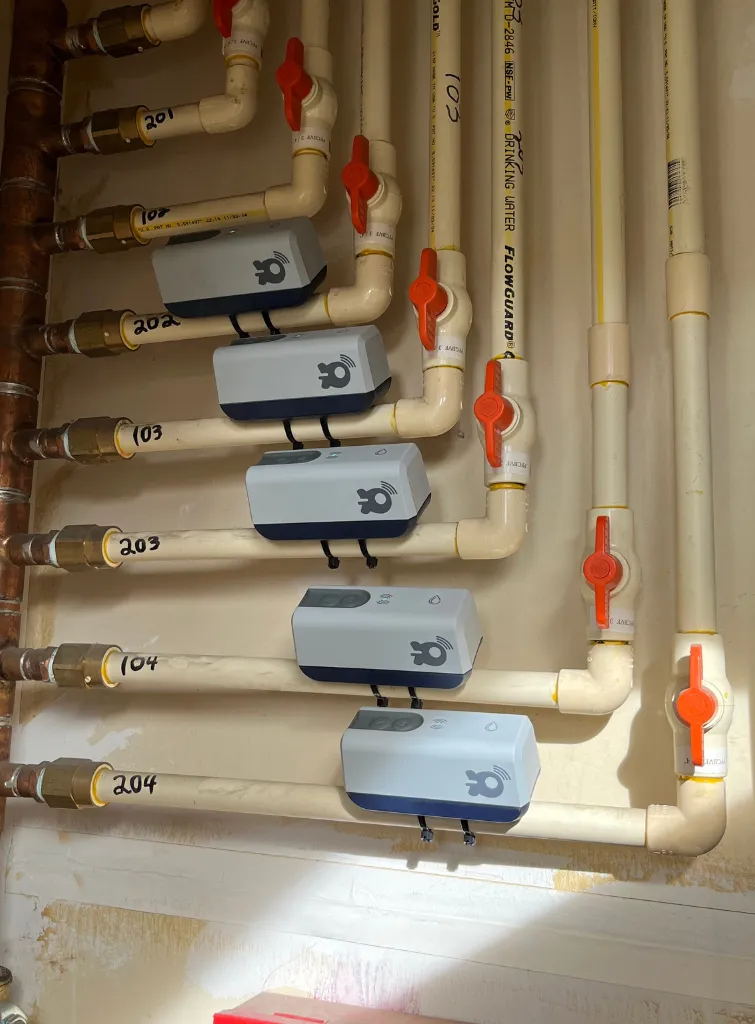
Design decisions focus on meter type, data collection, and system compatibility. Many HOAs choose over-the-pipe wireless meters to reduce manual reads and improve accuracy.
Important design factors to consider:
- Mechanical versus ultrasonic meters.
- Remote data transmission versus manual readings.
- Integration with billing and property management software.
- Future scalability for renovations or expansion.
At this stage, many boards benefit from reviewing Water Submetering for HOAs: The Complete Guide, which outlines design options, cost variables, and compliance issues in more depth.
Clear system design reduces installation delays and helps homeowners understand what changes are coming.
Installation Process
Installation is the most visible phase for residents, which makes communication essential.
Professional installers follow a structured plan to minimize disruption and ensure accuracy. The HOA water submeter installation steps typically involve isolating unit water lines, installing meters, testing connections, and verifying readings against the master meter.
While every property is different, most installations include:
- Advance written notice to residents.
- Scheduled unit access windows.
- Meter installation and leak testing.
- System validation and quality checks.
Many units can be completed in under an hour, depending on layout and access. Clear timelines and contact information significantly reduce resident frustration during this phase.
For boards that want a clear installation roadmap, the Step-by-Step Checklist for Implementing a Water Submetering System provides a structured planning framework.
Professional Insight from SimpleSUB Water
Before billing begins, most HOAs conduct a short post-installation review period. This window allows boards and property managers to confirm that all meters are reporting correctly and that readings align with expected usage patterns. It also gives residents time to ask questions and understand how their water use is being measured.
During this period, installers or billing providers will run parallel readings, comparing individual meters against the master meter to identify inconsistencies early. Small variances are normal, but larger gaps can indicate installation issues or previously hidden leaks.
Many HOAs find this review phase especially valuable because it reduces future disputes. Residents feel more confident when they know the system was tested before the billing went live. From an operational standpoint, this step creates a clean baseline for future bills and helps ensure long-term accuracy across the property.
These insights are based on observed implementation patterns across multiple HOA and multifamily submetering projects, not theoretical models. For example, installers often encounter hidden leaks or partial valve obstructions during initial readings, which can temporarily skew unit-level data until corrected. Residents appreciate proactive communication when these issues arise.
Billing
Billing is where submetering delivers the most noticeable benefits.
Instead of equal cost sharing, residents receive bills based on actual water use. Each billing cycle reconciles individual meter data with the master utility bill, accounting for common-area usage and system loss.
Most HOA water bills clearly break down the following:
- Individual unit consumption.
- Applicable water rates.
- Shared common-area water costs.
- Administrative or service fees (where permitted).
Transparent, itemized statements help prevent disputes and encourage conservation. Residents can see how their behavior affects their bill, often leading to reduced usage. Access to individual water-use data is one of the most effective drivers of conservation in multifamily HOA properties.
When billing is transparent, consistent, and tied directly to usage, it becomes one of the HOA's strongest tools for fairness, conservation, and cost predictability.
Ongoing Operations
Submetering systems require ongoing oversight to remain accurate and compliant.
Routine operations include data monitoring, meter maintenance, customer service, and regulatory updates. Many HOAs outsource these tasks to specialized billing providers to reduce administrative workload.
Ongoing monitoring also enables early leak detection. Unusual usage spikes often signal leaks inside units, allowing for faster repairs and preventing costly water damage.
When managed properly, submetering becomes a long-term financial and conservation strategy rather than just a billing change.
FAQs for Water Submetering in HOA Communities

The following are the most commonly asked questions about submetering in an HOA community.
1. Is HOA water submetering legal everywhere?
Laws vary by state and municipality. Most areas allow submetering, but billing practices are generally regulated.
2. How long does installation usually take?
Many units are completed in under an hour, though timelines depend on plumbing layout.
3. Will residents save money?
Lower-use households often see reduced bills, and overall property usage typically declines.
4. Who handles billing disputes?
Disputes are typically handled by the HOA or its billing provider, using verified meter data.
5. What happens if a meter malfunctions?
Modern systems flag irregular readings, and temporary billing adjustments are commonly based on historical usage.
What’s Next?
If your HOA is facing rising water costs, limited visibility into usage, or homeowner concerns about fairness, submetering might be just what you’ve been looking for. Working with experienced professionals like SimpleSUB Water helps ensure accurate installation, compliant billing, and long-term success.
*This blog post was written by water submetering specialists at SimpleSUB Water, a provider of unit-level water metering solutions for HOA and other residential and commercial properties across the U.S.
DISCLAIMER: The information provided in this guide is for general educational and informational purposes only. It is not intended as legal, financial, or engineering advice, nor should it be relied upon as a substitute for professional consultation. Property owners and managers should consult with qualified experts, local authorities, and licensed contractors before making decisions regarding water submetering, resident water billing, or related utility management practices. SimpleSUB Water makes no representations or warranties, expressed or implied, about the accuracy, completeness, or applicability of the content in specific situations. All utility regulations, building codes, and compliance requirements vary by jurisdiction and are subject to change.
Sources and Further Reading:
https://www.epa.gov/watersense/statistics-and-facts
https://www.simplesubwater.com/resources/water-submetering-for-hoas-the-complete-guide
https://www.simplesubwater.com/resources/ultimate-guide-to-water-submetering
https://www.simplesubwater.com/resources/how-to-get-hoa-members-on-board-with-submetering
https://www.simplesubwater.com/resources/florida-water-submetering-case-study
https://www.simplesubwater.com/how-it-works
https://www.simplesubwater.com/pricing
Request a Demo
We'll design an affordable, easy-to-install solution for your submetering project, large or small.