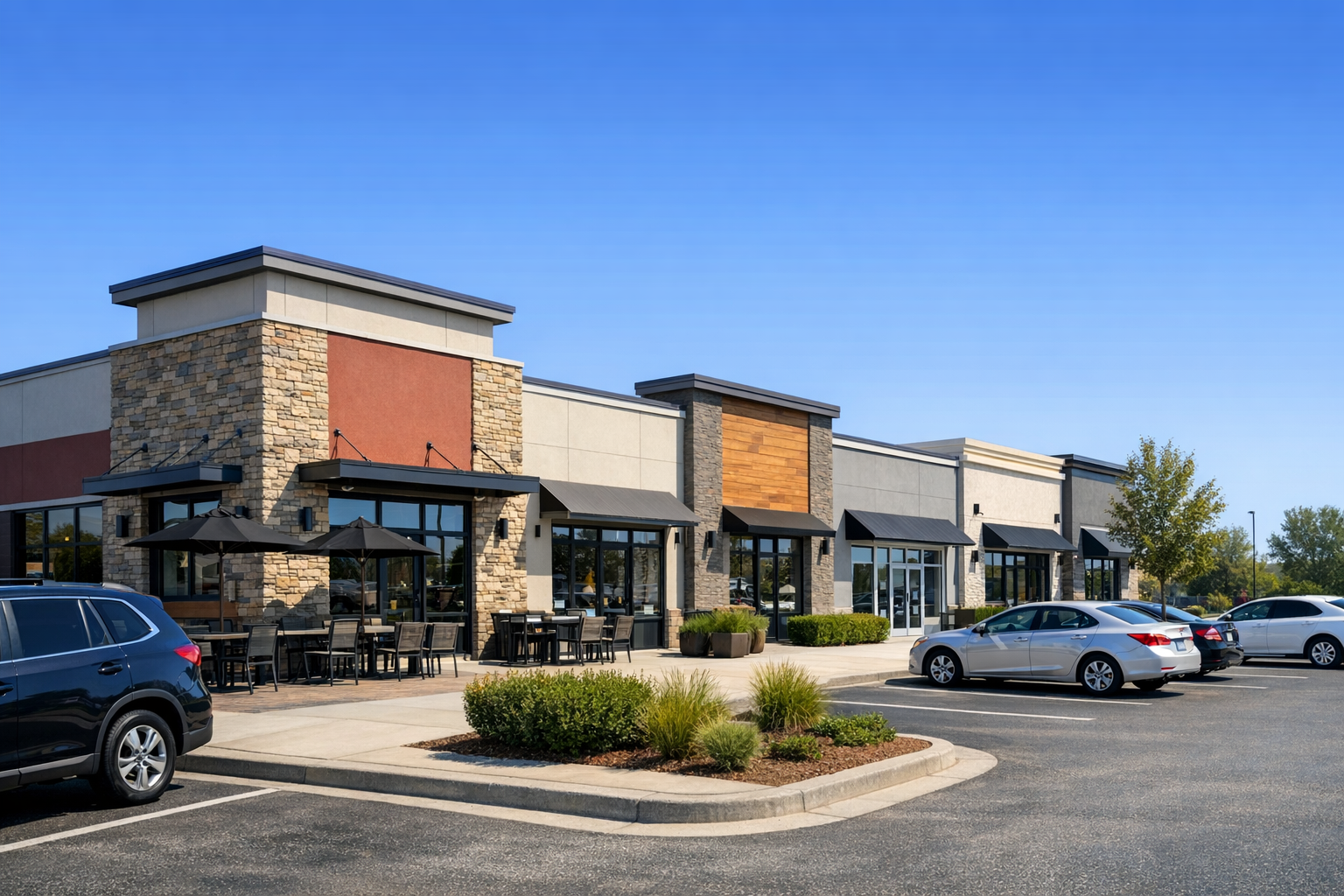
Still splitting your water bill by square footage like every suite uses the same amount? In a retail center, a quick-service restaurant and a salon can burn through ten times the water of the boutique next door, but pro-rata CAM charges them all the same. Your light tenants are overpaying and disputing it, your heavy users have no reason to cut back, and a running toilet in a vacant suite can drain the master bill for months before anyone notices.
Here's the truth. Retail water submetering isn't just about fair billing anymore. It's a margin strategy. Centers that switch see 15 to 40% lower water use and a direct, compounding lift to NOI. Light-water tenants stop complaining. Heavy users finally see their real number. And every gallon you used to absorb starts landing back on the right ledger.
If you want fewer CAM disputes, fewer surprise leaks, and more water cost recovered every month, this guide shows you exactly why submetering is becoming the retail standard, what it costs, the ROI to expect, and how to roll it out across a center without closing a single store.
Key takeaways
Here's what you can expect from reading this guide:
- Square-footage allocation is structurally unfair in retail because water use per suite varies more than in almost any other property type. A restaurant or salon can use 10 to 50 times the water of a dry-goods tenant of the same size.
- Submetering bills each suite on actual usage, which holds up under CAM audit rights and NNN reconciliation in a way that estimated allocation does not.
- Undetected leaks are a retail-specific risk. Irrigation systems, vacant suites between tenants, and restaurant equipment run unattended, and a master meter hides all of it.
- Clamp-on submeters install in minutes on the outside of the existing pipe, with no plumbing, no water shutoff, and no suite access during business hours.
- Recovery is high. SimpleSUB customers recover 95%+ of water costs through usage-based billing, and tenants use measurably less once they are accountable.
- It is cellular, not Wi-Fi. No tenant network, no IT, no gateway. The submeter powers on and connects to the strongest cell tower on its own.
What retail water submetering is
Water submeters install on each tenant suite (and on shared loads like irrigation and common-area restrooms) behind the property's single utility connection. The city still reads one master meter and sends the landlord one bill. The submeters then break that total down by who actually used the water.
This is different from allocating water through CAM by pro-rata share, which is the retail version of RUBS (Ratio Utility Billing System). Pro-rata allocation estimates each tenant's water by a formula, usually square footage, sometimes a fixed percentage written into the lease years ago. It never measures anything. Submetering measures.
The distinction matters more in retail than in any other asset class. In an apartment building, units are roughly similar, so a square-footage split is rough but not absurd. In a retail center, the tenant mix is the whole point, and that mix is wildly uneven on water. A submeter is the only way to bill a hair salon, a phone repair shop, and a smoothie bar fairly off the same line.
A note on terminology: anything you install on a tenant line is a submeter. The single utility connection feeding the center is the master meter or city meter. Keep the two straight in your lease language and your tenant communications.
How it works on a shared retail center
Retail plumbing looks intimidating because everything branches off shared lines, but submetering maps cleanly onto it:
- Each tenant suite has a supply line. In most centers, every suite is fed by its own branch line off the main, usually in a back-of-house utility area, a shared mechanical room, or a meter bank. That branch is where the submeter goes.
- A clamp-on submeter straps onto the outside of that pipe. No cutting, no shutoff. The submeter uses ultrasonic technology to measure flow through the pipe wall and identifies the pipe type and size automatically so calibration is correct from the start.
- It connects over cellular and reports continuously. Press a button and the submeter self-selects the strongest cell network. Usage data flows to the SimpleSUB web app in real time, with no Wi-Fi, hub, gateway, or tenant network involved.
- Shared loads get submetered too. Irrigation, common-area restrooms, a shared janitor's supply, or a fire line riser can each carry their own submeter, so common water is identified instead of dumped into an unallocated bucket.
- The platform handles billing. SimpleSUB generates usage-based invoices per suite, exports for your accounting or property management system, and flags anomalies before they show up on the city bill.
SimpleSUB submeters read accurate to within ±5% using patented over-the-pipe ultrasonic technology. They work on copper (Type M and L), PVC (Schedule 40), CPVC, and PEX, on pipes up to 1 inch with the indoor i1 and outdoor x1, and up to 2 inches with the x2 for larger tenant or irrigation lines.
Why square-footage and CAM allocation don't work for retail
Most master-metered centers recover water through the CAM fee, allocated by each tenant's pro-rata share of gross leasable area. It is simple to administer, but is almost always wrong. Here is why it breaks down specifically in retail.
Retail water use has nothing to do with square footage
A 2,000 square foot quick-service restaurant runs dishwashers, prep sinks, mop sinks, ice machines, soda fountains, and customer restrooms all day.
A 2,000 square foot insurance office runs a break-room sink and one toilet. Under pro-rata, they pay the same water per square foot. The office subsidizes the restaurant every single month.
This is not a small gap: in one shopping center SimpleSUB submetered, a single quick-service restaurant tenant was found using 8 to 9 times the water of comparable-size suites, and food service alone accounts for roughly 15% of all commercial water use (EPA WaterSense, Saving Water in Restaurants). Multiply that across a center with a few heavy users and the cross-subsidy is large, persistent, and indefensible.
It invites disputes you are required to answer
Most retail leases give tenants the right to audit CAM charges, and the shopping-center industry's own association advises tenants to negotiate exactly that (ICSC, CAM Demystified).
When a careful tenant audits and asks how their water charge was calculated, "we divided the total by square footage" is not a satisfying answer, because it has no relationship to what that tenant actually used. Submetered usage data ends the argument before it starts. You are billing a measured number, not defending a formula.
It hides waste instead of surfacing it
Pro-rata allocation passes the entire master bill no matter how high it goes, so nobody has any reason to care that it is climbing.
A running toilet, a stuck irrigation valve, or a leaking restaurant line just inflates everyone's pro-rata share. Tenants have no visibility and no incentive to flag it, and the landlord finds out at reconciliation, after the money is gone.
It penalizes your low-water-use tenants and subsidizes your heavy users
The boutiques, offices, and service tenants who use almost no water are the ones most likely to scrutinize their CAM statement, and they are the ones being overcharged. Meanwhile the heavy users have no reason to conserve because their bill is capped by a formula. Submetering flips both: light users pay less and stop complaining, heavy users see their real number and cut back.
How retail centers lose money on water
Beyond unfair allocation, retail has structural leaks in the literal and financial sense. Here is where the money actually goes.
Vacant suites between tenants
Retail turns over. A suite sits empty for three, six, nine months between leases, and during that time a toilet flapper fails or a supply line drips, and the water runs into a master bill nobody is scrutinizing because there is no tenant to question it. The EPA estimates a single leaking commercial toilet can waste up to 4,300 gallons a day and roughly $1,400 a month, and a broken distribution line can run up to $86,000 a year (EPA WaterSense at Work, Leak Detection and Repair). This is not hypothetical: in one 40-year-old retail strip SimpleSUB submetered, a stuck toilet pushed a single suite from 200 to 1,400 gallons a day before the alert caught it.
Irrigation that nobody is watching
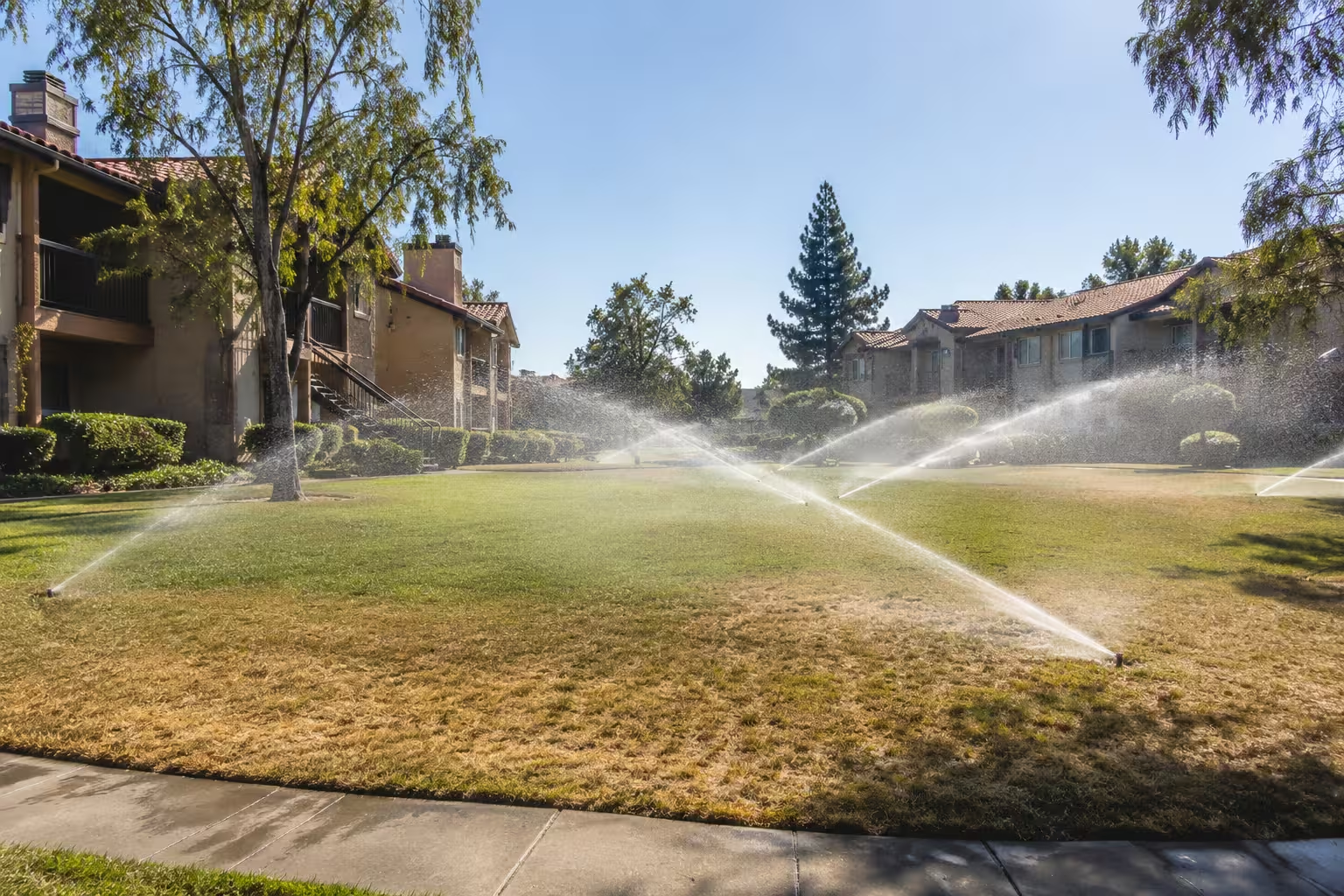
Landscape irrigation is one of the largest and least supervised water loads in a retail center. The EPA estimates that as much as 50% of the water used outdoors is lost to wind, evaporation, and runoff from inefficient irrigation, and a poorly maintained system can waste up to 25,000 gallons a year (EPA WaterSense, Statistics and Facts). Controllers get stuck, valves fail open, and heads break, and an irrigation zone can run for days. Because irrigation is common-area water, it lands in CAM and gets spread across tenants, so no single party feels the pain enough to investigate. A submeter on the irrigation line turns an invisible cost into a real-time alert.
Restaurant and service-tenant equipment
Food service, salons, laundromats, fitness, and pet care run water-intensive equipment continuously. When a commercial dishwasher solenoid sticks or a softener regenerates on a broken cycle, the overage is enormous and silent. Without a submeter on that suite, the landlord cannot even tell which tenant caused a spike on the master bill.
Unallocated and under-recovered water
Most centers do not recover 100% of water through CAM. There is almost always slippage: common-area use that never gets allocated, vacancy losses, and caps or exclusions negotiated into individual leases. Every gallon that is not allocated is a gallon the landlord paid for and never recovered. SimpleSUB customers recover 95%+ of water costs, which closes most of that gap.
Rate increases you cannot pass through cleanly
Water and sewer rates have climbed steadily. Combined U.S. water and sewer bills rose about 24% in the five years through 2024 (Bluefield Research), and water prices in major cities are up nearly 50% since 2010 (Circle of Blue). When your allocation method is a blunt formula, every rate increase amplifies the unfairness and the disputes. Accurate per-suite data lets you pass rate increases through cleanly because each tenant sees exactly what they used at the new rate.
Why water submeters are becoming the retail standard
Fair for tenants and defensible for owners
Usage-based billing is the only allocation method that is fair to the light user and the heavy user at the same time. The boutique pays for a boutique's worth of water. The restaurant pays for a restaurant's worth. Neither can argue with a measured number, which means fewer disputes, faster CAM reconciliations, and better tenant relationships at renewal.
It protects NOI and asset value
Water that leaks out of a master bill, or that never gets allocated, is pure NOI erosion. Recovering it has a direct, compounding effect on value. At a 6.5% cap rate, every $10,000 of annual water cost you stop absorbing or start recovering adds roughly $150,000 to the appraised value of the center. (Illustrative; actual impact depends on your cap rate and lease structure.) That is the difference between a one-time hardware purchase and a permanent line-item improvement.
It catches problems before they become claims
Real-time leak alerts on tenant suites, vacant units, and irrigation turn water from a reactive headache into a monitored system. A flagged continuous-flow alert at 2am on a vacant suite is a maintenance ticket. The same leak undetected for two months is a water bill spike, possible structural damage, and an insurance conversation.
Massive water waste reduction
When tenants can see and are billed for their own usage, they conserve. An EPA-funded national study found that true submetering cut consumption by about 15%, while formula-based allocation billing produced no statistically significant savings at all (Aquacraft / EPA, via EBMUD). SimpleSUB customers regularly see reductions in the 15 to 40% range. Across SimpleSUB's customer base, that adds up to more than 9 million gallons saved per year. For a center, lower consumption means a lower master bill on top of fairer allocation.
"From sales to tech support, this company is extremely helpful, and I am so thankful for the technology to see and track how much water is being used by each unit. This is so much more affordable than putting in separate water for each person in the building. It accomplishes the same thing at a cost I can afford." — Sandy K., Commercial Property Manager
SimpleSUB vs. pro-rata CAM allocation
Smart retail operators are switching because pro-rata allocation gets less defensible every renewal cycle, while submetering gets more valuable as rates rise and tenants scrutinize CAM harder.
What retail submetering costs
The honest answer is that it depends on your pipe sizes, the number of suites and shared loads, and whether you bundle professional installation. Here is the framework.
Traditional inline submeters require a licensed plumber, a water shutoff per line, and cutting into the pipe, which introduces a new potential leak point at every meter. Installed cost commonly runs several hundred to well over a thousand dollars per line once labor is included, and one commercial property manager was quoted $50,000 to inline-meter a single building. Inline metering also means coordinating shutoffs around tenant business hours, which in a busy center is a logistical headache on its own.
"We were quoted $50,000 for a plumber to install inline meters, which was completely out of our budget. SimpleSUB's solution cost a fraction of that, under $400 per unit with a small monthly subscription, and provided the same accurate data with much less hassle." — Luis O., Commercial Property Manager
SimpleSUB clamp-on submeters install on the outside of the existing pipe in minutes, with no plumber and no shutoff, so there is no labor-heavy line item and no new leak risk.
A neighborhood center with ten standard suites and one irrigation line might use ten i1 or x1 submeters plus one x2, putting hardware in the rough range of $4,000 to $5,000 for the whole center, a fraction of an inline quote, with installation measured in an afternoon rather than weeks of coordinated shutoffs.
The subscription covers cellular connectivity, real-time monitoring, dashboard access, automated reads, leak alerts, the billing platform, a 5-year warranty, and lifetime data retention. In most centers it is passed through to tenants as part of the utility billing, the same way the water charge is. Billing starts 30 days after shipment, and larger rollouts are often structured with a free subscription period to start.
A few caveats worth stating plainly:
- Pipe size drives the submeter choice. Heavy-water suites and irrigation often sit on larger lines and need the x2.
- Professional installation is available and is frequently included in larger center deals.
- These are list prices. Volume discounts apply across a portfolio of centers.
Why the cheapest option usually costs more
A bargain submeter with no platform, no leak alerts, and manual reads pushes you right back toward pro-rata's problems: no real-time waste detection, more admin time, and weaker recovery. The point of submetering in retail is not just to split the bill, it is to catch the leak in the vacant suite and the stuck irrigation valve before they hit the master meter. A sensor without software does not do that.
The ROI case for retail
Retail ROI comes from three stacked effects: stopping the overage you currently absorb, recovering water you currently under-allocate, and lowering total consumption once tenants are accountable. Here is an illustrative walkthrough. (Estimate only. Your numbers depend on your rates, tenant mix, and current recovery.)
Take a ten-suite neighborhood center on a master meter, with a water and sewer bill averaging $2,400 a month, or about $28,800 a year. Assume two heavy-water tenants (a quick-service restaurant and a salon) and a mix of light-water retail and office.
- Recovery gap. Suppose the center currently recovers about 75% of water through pro-rata CAM, absorbing the rest through common-area slippage, vacancy, and lease caps. Closing that to 95%+ recovers roughly 20 points of a $28,800 bill, about $5,760 a year back to NOI.
- Consumption reduction. Once each suite is billed on actual usage, assume a conservative 20% drop in total consumption. On a $28,800 bill that is about $5,760 less water purchased, and because most of it is now allocated, the landlord captures the common-area share while tenants see lower bills on their own lines.
- Leak avoidance. One caught vacant-suite leak or stuck irrigation valve a year easily avoids thousands of dollars in wasted water plus the risk of a damage claim.
Against that, hardware for the center is in the low single thousands and the subscription is typically passed through. The payback on the equipment is usually well under 12 to 18 months, and after that the NOI improvement is permanent.
Then there is the asset-value multiplier. If submetering improves annual NOI by even $10,000 between recovery and reduced waste, at a 6.5% cap rate that is roughly $150,000 of added value to the center. The hardware is a small one-time cost. The NOI improvement compounds into the appraisal and the eventual sale price. Frame this accurately when you model it: tenants are paying their fair share of actual usage, which protects and recovers NOI. It is not a "return" on the meters themselves.
How to get started, step by step
You do not have to submeter the whole center on day one. A staged rollout proves the value and keeps every store open.
1. Audit the center and identify the loads
Walk the property and map it: how many suites, where each branch line is, pipe materials and sizes, where the irrigation controller and lines run, and which suites are the heavy-water tenants. Note any shared loads (common restrooms, janitor supply, irrigation) that should carry their own submeter so common water is identified instead of dumped into CAM.
2. Baseline against the master meter
Pull 12 months of master-meter bills so you know your starting consumption and cost, and so you can later prove the reduction. If you can, note any months with unexplained spikes, those are often undetected leaks you will now be able to localize.
3. Start with a pilot
Submeter the heavy-water suites and the irrigation line first, plus a couple of light-water suites for contrast. This is where the unfairness of pro-rata shows up fastest, and it gives you hard data to bring to the rest of the tenants. Because installs are clamp-on and external, this happens without entering any suite during business hours and without a shutoff.
4. Wire up billing
Decide how usage data flows into your billing. SimpleSUB generates per-suite usage invoices and exports to your property management or accounting system, so you can fold water onto the tenant ledger alongside CAM and rent. Confirm the rate you pass through ties to the actual utility rate.
5. Communicate it as fairness, not a rent increase
This is the step retail owners most often underplay. Tell tenants plainly: water is moving from an estimated CAM split to measured usage, so each store pays for exactly what it uses. Your light-water tenants will be relieved, because most of them have suspected they were overpaying. Frame the heavy users' side around transparency and leak protection. Give 30 days' notice and use a water submeter lease addendum so the billing basis is documented at renewal.
6. Roll out center-wide and monitor
Once the pilot proves out, submeter the remaining suites. Run a verification month where you compare the sum of submeters against the master meter to confirm everything reconciles. After that, the platform monitors continuously, flags anomalies, and your CAM water line becomes a measured pass-through instead of a recurring argument.
Real-world results
These are real SimpleSUB retail and commercial installs.
Lincoln Center: fair billing across 32 suites
Lincoln Center, a commercial retail center managed by Griffis Blessing, was splitting its water bill equally among tenants even though consumption varied widely from suite to suite. That created disputes and left the team blind to leaks. SimpleSUB installed 32 clamp-on, LTE-connected submeters with no pipe cutting. Billing shifted to actual usage, the disputes went away, and the system caught a leaking toilet before it turned into real waste.
"SimpleSUB is much cheaper than installing in-line meters through the utility company. They're great to work with and very flexible, able to customize their offering to your needs." — Darlene H., Commercial Property Manager, Griffis Blessing
"This is the beginning of a revolution for commercial building utility monitoring and billing. SimpleSUB brings fairness, accountability, and transparency." — Darlene H., Commercial Property Manager, Griffis Blessing
A 40-year-old retail strip: a 1,400-gallon-a-day leak caught
A 40-year-old retail strip with two buildings and 25 tenants, including a dry cleaner and a dollar store, had no tenant-level metering and relied on historical billing data with no way to spot anomalies. The aging plumbing made inline metering risky. SimpleSUB installed 25 clamp-on submeters. They immediately flagged a stuck toilet that had pushed one suite from 200 to 1,400 gallons a day, then surfaced several more hidden leaks, all without invasive plumbing work and without the billing disputes the center had lived with for years.
"SimpleSUB's feature-light and benefit-heavy design makes it a breeze to use while delivering powerful results." — Bob, Water Conservation Consultant
A 100+ tenant shopping center: 10 leaks and reporting cut from hours to minutes
A large shopping center with more than 100 tenants, anchored by national brands, had aging submetering with connectivity problems and delayed reporting. Twenty-five tenants were flagged for unusually high consumption with no way to see why, and compiling the monthly report took hours. SimpleSUB's LTE submetering replaced it with no plumbing work. Over nine months the system identified and resolved 10 leaks, flagged one quick-service restaurant tenant using 8 to 9 times the water of comparable suites, and cut monthly reporting from hours to about four minutes.
"SimpleSUB has been a game-changer for our property. The plug-and-play technology makes it simple to use, and the LTE connectivity ensures accurate, real-time data." — Bob L., Water Conservation Consultant
The benchmark next door: 85% less water in an office building
The same approach holds in adjacent commercial. A multi-unit light industrial and office building on a single city meter, plagued by unexplained weekend and after-hours spikes, used SimpleSUB to cut daily water use by more than 85% and save over $5,000 a year on an investment under $1,500, with continuous-flow alerts catching running toilets the moment they started.
"SimpleSUB's non-invasive solution offers an immediate path to savings and accountability, without the disruption of traditional metering systems." — Kristen M., Property Manager
Takeaways from the field
The throughline across every one of these is the same: equal-split and historical-estimate billing hides both unfairness and waste. Measured per-suite usage fixes the billing, the leak alerts protect NOI, and the monthly reporting burden drops to minutes. The centers that move first turn water from an uncontrolled, contested CAM line into a monitored, measured system.
NNN, CAM, and legal considerations
Retail leases make water billing a contractual question, not just an operational one. A few principles to get right. (This is general information, not legal advice. Confirm with counsel for your jurisdiction and lease forms.)
Match the billing method to the lease
In a triple-net (NNN) lease, the tenant is responsible for their share of operating expenses including utilities, so moving from pro-rata to submetered usage is usually well within the landlord's rights, but the mechanism should be documented. In gross or modified-gross leases, water may be baked into rent, so introducing direct submetered billing typically needs a lease amendment. Review your standard form before you roll out.
Use a water submeter lease addendum
Document the change in writing: that water is billed on measured submeter usage, the rate basis (tied to the actual utility rate), how often tenants are billed, and how they can review their reads. This protects you under CAM audit rights and at renewal, and it makes the new method transparent rather than a surprise on the next statement.
Pass through cost, not markup
The defensible position is to recover the actual cost of water and sewer, allocated by measured usage, plus the legitimate cost of the billing service if your lease and jurisdiction allow it. Marking up the commodity rate above what the utility charges invites exactly the disputes submetering is meant to end, and several states prohibit it outright: Texas, California, and Arizona all require submetered utility billing to be a pass-through of the utility's actual cost with no markup, allowing only a limited, disclosed administrative fee (Texas 16 TAC §24.281; California SB 7; Arizona A.R.S. §33-1314.01). Keep it a clean pass-through.
Give proper notice
Provide tenants advance notice before the billing method changes, commonly 30 days, and align it with lease renewal or amendment timing where possible. Notice plus a clear addendum plus measured data is a combination that almost never generates a fight.
Know your jurisdiction
Submetering rules vary by state and locality, and a few markets have restrictions or active legislation worth checking before you install. As of this writing, Massachusetts and Miami-Dade are no-go markets, Texas requires clamp-on submeter registration to be confirmed before install, and several other states have active bills worth watching. Commercial retail is generally far more permissive than residential, but verify the current status for your location before rolling out.
How to choose a submetering partner
Not all water submeters are the same. Evaluate any provider on these, and apply them to SimpleSUB and to any alternative you are comparing:
- Accuracy. Ask for the accuracy spec in writing. SimpleSUB reads to within ±5%, which is the standard for cost recovery in most states. You can see independent verification of this specification here.
- Install method and disruption. Clamp-on and external means no shutoffs and no closing a store to install. Inline means plumbers, shutoffs, and new leak points. In an occupied center, that difference is enormous.
- Connectivity. Cellular works anywhere and needs no tenant network or IT. Wi-Fi-dependent submeters fail in exactly the back-of-house and outdoor locations retail lines tend to run.
- Leak detection. Real-time alerts per suite and on irrigation are where the avoided-cost ROI lives. A submeter that only totals usage is doing half the job.
- Billing and integration. Confirm the platform generates per-suite invoices and exports to your accounting or property management system, so water folds into your existing CAM and rent workflow.
- Support and warranty. US-based support and a multi-year warranty matter when the system is sitting on your NOI. SimpleSUB includes a 5-year warranty and lifetime data retention.
SimpleSUB is built to win on every one of these: clamp-on install in minutes, cellular with no Wi-Fi, ±5% accuracy, 24/7 leak alerts, integrated billing, and US-based support, assembled in Colorado. It is a complete system, not a bare sensor.
Looking ahead: from reactive to managed water
Submetering is the foundation for managing water across a portfolio instead of reacting to it. Once every suite, irrigation line, and common load is measured and reporting in real time, a few things become possible that a master meter never allowed:
- Anomaly detection across the center. Continuous-flow alerts, off-hours usage flags, and suite-to-suite comparisons surface problems the day they start.
- Portfolio-level visibility. For owners with multiple centers, one dashboard shows usage, recovery, and leak status across every property, which turns water from a per-site surprise into a managed line.
- Cleaner reconciliations and renewals. Measured data makes CAM reconciliation faster and renewal conversations easier, because there is nothing to argue about.
- Sustainability and reporting. For owners with ESG or sustainability commitments, submetering delivers the conservation and the data to report it. The 9 million-plus gallons saved each year across SimpleSUB's base is exactly the kind of measurable impact reporting frameworks want.
Water rates are not going down, retail tenants are not getting less sophisticated about CAM, and vacant-suite and irrigation leaks are not going to announce themselves. The centers that submeter now convert an uncontrolled, contested expense into a measured, recoverable, and largely self-funding system, and they do it without cutting a single pipe or closing a single store.
What's next
- Get a quote for your center or portfolio, sized to your suites and pipe types.
- Book a demo to see the per-suite dashboard, leak alerts, and billing export.
- Run a pilot on your heavy-water suites and irrigation line to prove the case before rolling out center-wide.
- Request a water submeter lease addendum to document the billing change cleanly at renewal.
Fair, accurate water billing protects your NOI, ends CAM disputes, and catches the leaks that quietly drain a center. The sooner the submeters are on, the sooner the savings start.
FAQs
Can you really submeter water in a retail center where everything is on shared lines? Yes. That is exactly what clamp-on submetering solves. Each tenant suite has its own branch line off the main, and the submeter clamps onto the outside of that line to isolate that suite's usage. Shared loads like irrigation and common restrooms get their own submeters so common water is identified instead of buried in CAM. No replumbing required.
Will installation disrupt my tenants or close any stores? No. Installs are external clamp-on, take minutes per line, and require no water shutoff and no entry into the tenant's sales floor during business hours. Most of the work happens in back-of-house utility areas and meter banks.
How is this different from allocating water through CAM by square footage? CAM pro-rata estimates each tenant's water by a formula and never measures anything, so a restaurant and a boutique of the same size pay the same, which is not fair to either. Submetering bills each suite on actual measured usage, which is fair, holds up under CAM audit rights, and surfaces leaks that pro-rata hides.
My center is older. Will it work? Most likely! As long as your property has a water shutoff for each individual unit, SimpleSUB should work. The submeters work on copper, PVC, CPVC, and PEX, on legacy plumbing in decades-old centers, with no cutting and no shutoff. Automatic pipe detection calibrates to the pipe it is on.
How accurate is it, and is that enough for billing? SimpleSUB submeters read accurate to within ±5% using patented over-the-pipe ultrasonic technology, which is the standard for cost recovery in most states. Revenue-grade utility compliance is not required for tenant cost recovery in most jurisdictions, but confirm your local rules.
Can I bill the monthly subscription and water charge back to tenants? In most centers, yes. Water and the subscription are typically passed through as part of utility billing, the same way the water charge already flows through CAM. Document the method in a lease addendum and tie the rate to the actual utility rate.
What about irrigation and vacant suites? Both are major sources of hidden retail water loss, and both can carry their own submeter with real-time leak alerts. A stuck irrigation valve or a running toilet in a vacant suite gets flagged immediately instead of showing up months later on the master bill.
Sources and further reading
Water and sewer rates
- Bluefield Research, U.S. water and sewer bills up 24% in five years (2025)
- Circle of Blue, annual water pricing survey: up ~50% since 2010
Retail tenant water use and leaks
- EPA WaterSense, Saving Water in Restaurants (food service ~15% of commercial water use)
- EPA WaterSense at Work, Leak Detection and Repair (commercial leak dollar figures)
- EPA WaterSense, Statistics and Facts (irrigation waste)
- EPA WaterSense, Fix a Leak Week
- EPA WaterSense at Work, Vehicle Washes (car-wash benchmarks)
Submetering effectiveness
- Aquacraft / EPA-funded national submetering study (~15% reduction; allocation billing shows no significant savings), via EBMUD
- EPA WaterSense at Work, Metering and Submetering as a best practice
CAM, NNN leases, and billing regulation
- ICSC, CAM Demystified (allocation and tenant audit rights)
- O'Flaherty Law, Commercial tenants' rights to a CAM audit
- Texas 16 TAC §24.281, no-markup pass-through rule
- California SB 7 (2016), submetering pass-through rules
- Arizona A.R.S. §33-1314.01, landlord utility billing
SimpleSUB retail case studies
- Fair Billing Made Simple: Griffis Blessing's success with SimpleSUB (Lincoln Center)
- From Leaks to Savings: the water conservation win at a 40-year-old retail strip
- Plug-and-Play Precision: how a retail center saved thousands
This guide is for general educational purposes and is not legal, financial, or engineering advice. Submetering rules, billing regulations, and lease requirements vary by jurisdiction and by lease form. Submetering and direct tenant billing may not be permitted in all locations. Confirm requirements with qualified legal counsel and your local water utility before implementing. SimpleSUB Water makes no representations as to compliance in any specific jurisdiction.
Request a Demo
We'll design an affordable, easy-to-install solution for your submetering project, large or small.