
Multifamily Water Submetering Billing: Best Practices for Property Managers
Articles




In too many multifamily properties, hidden water waste and unfair billing disputes are quietly draining thousands of dollars in recoverable revenue and countless staff hours every month. That means water costs can no longer be just a background expense for multifamily properties.
Across the U.S., rising utility rates and aging infrastructure have made water one of the most scrutinized operating line items. In multifamily portfolios where water submetering is implemented correctly, billing accuracy improves, disputes decline, and both owners and tenants gain confidence in the process.
Water submetering billing gives property managers a way to align fairness, cost recovery, and tenant trust. This article outlines best practices for water submetering providers working with multifamily properties nationwide, covering setup, communication, dispute resolution, software integration, tenant portals, and compliance.
The Fundamentals of Multifamily Water Billing Explained
Water submetering measures individual unit water consumption using dedicated meters, allowing tenants to be billed for their actual usage rather than estimated allocations. This approach replaces master-meter billing models, in which costs are allocated based on formulas such as square footage or occupancy counts.
Compared to ratio-billing methods (RUBS), submetering creates a direct connection between use and cost. Property managers gain clearer insight into consumption patterns, while tenants can see how their daily habits affect their bills. That transparency plays a central role in reducing disputes and improving conservation outcomes.
You can learn more about this and other important submetering information by reviewing our Apartment Water Submetering Guide (for Fair and Profitable Billing).
A well-designed billing structure typically includes volumetric water charges and, where applicable, sewer or wastewater allocations tied to measured usage. Keeping billing logic simple makes invoices easier to understand and easier to defend.
Setting Up Tenant Water Billing Correctly from the Start
It’s extremely important to set up the tenant's water billing correctly from day one.
Meter Accuracy and Unit Mapping
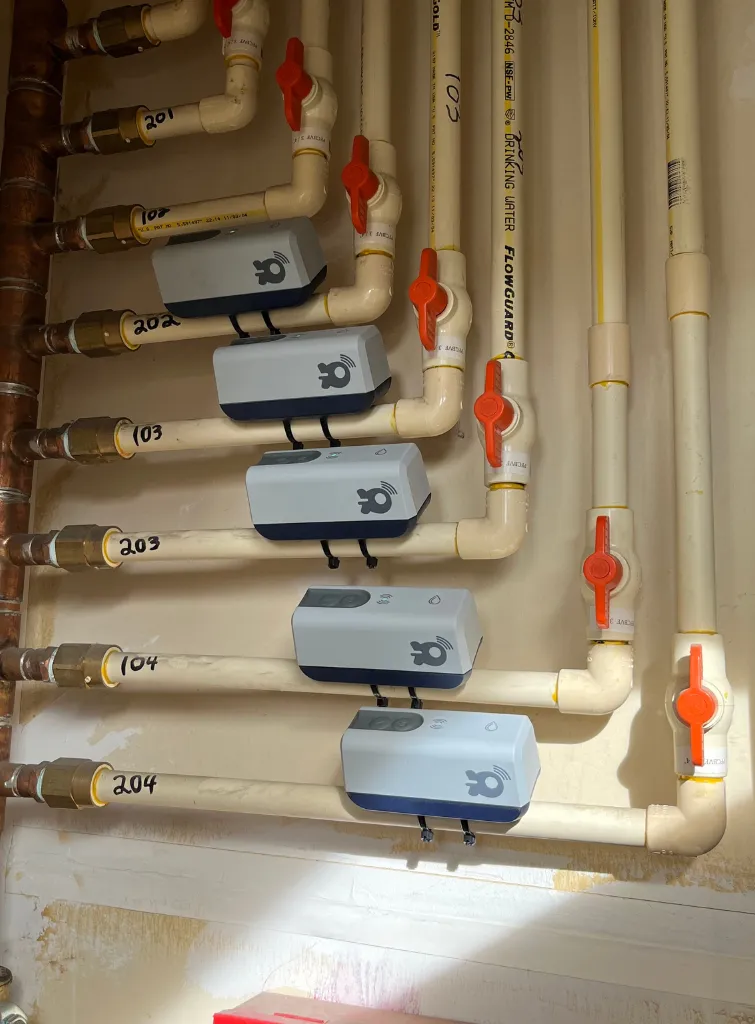
Accurate billing begins with correct installation. Each submeter must be mapped to the proper unit and tested before billing starts. Mapping errors remain one of the most common causes of billing disputes and are difficult to resolve once the invoices have gone out.
Modern metering systems support automated reads and timestamped usage data, which strengthens auditability and reduces manual errors. Verifying meter serial numbers against unit records during commissioning protects data integrity long-term.
Download The Ultimate Guide to Water Submetering to learn everything you need to know about submetering and all the intricacies that accompany it.
Billing Structure and Timing
Align billing cycles closely with utility invoice periods. Large timing gaps between usage and billing confuse tenants and erode trust. Clear proration rules for move-ins and move-outs should be documented before the first bill is issued.
For a structured rollout, follow a defined implementation framework such as the Step-by-Step Checklist for Implementing a Water Submetering System.
Communicating Water Charges Transparently to Tenants
Clear communication prevents most billing friction.
Pre-Billing Education
Before billing begins, tenants should receive a simple explanation of how submetering works, why it’s being implemented, and what their first bill might look like. A short onboarding guide and a sample bill will help reduce confusion and proactively set expectations.
Designing Clear Bills
Effective water bills show the following:
- Consumption for the billing period
- Applicable rates
- Any additional allocations should be explained in plain language
Including prior usage comparisons helps tenants understand normal patterns and identify unusual changes. Water billing is one of the most closely examined charges tenants receive, so clarity is important.
Ongoing Communication
Seasonal reminders, conservation tips, and proactive notices about known issues help reduce reactive support requests. Transparency builds confidence over time.
Handling Billing Disputes and High-Usage Complaints
Disputes tend to cluster around unexpected increases.
Common Causes
Most high-usage complaints can be traced back to the following:
- Plumbing leaks
- Appliance failures
- Billing period misunderstandings
Usage data enables staff to distinguish operational issues from behavioral ones.
A Structured Resolution Process
A consistent dispute workflow improves response times:
- Log the concern
- Verify meter data
- Review historical usage
- Coordinate inspections if needed
Objective data removes emotion from the equation and helps resolve issues fairly.
Integrating Water Submetering with Property Management Software
Integration reduces administrative load and improves consistency.
Automated data exchange between submetering platforms and property management software allows water charges to post directly to tenant ledgers. This reduces manual entry errors and simplifies reconciliation.
Here is what you need to look for:
- Secure data transfers
- Audit trails for meter reads
- Exportable reports for compliance reviews
Testing integrations before going live helps avoid downstream billing disruptions.
How to Use Tenant Portals to Improve Engagement and Reduce Support Requests
Tenant portals extend transparency beyond the invoice.
Self-Service Access
Portals allow tenants to view the following:
- Current and historical water usage
- Billing statements
- Alerts related to abnormal consumption
This visibility empowers tenants and reduces inbound billing questions.
Usage Alerts and Engagement
When tenants receive alerts tied to usage changes, they are better able to identify issues more quickly. Early leak detection protects both tenants and property owners from escalating costs and damage.
Staying Compliant with Local and State Water Billing Regulations
Water submetering is widely permitted but regulated at the state and municipal levels.
Compliance Areas to Monitor
Common regulatory requirements include the following:
- Advance disclosure in leases
- Limits on administrative fees
- Rules governing billing adjustments
Local ordinance might also specify meter testing standards or dispute timelines.
Maintaining documentation, billing records, and audit trails supports compliance and protects against enforcement actions.
Common Water Submetering Billing Mistakes and How to Avoid Them
Here are some of the most common mistakes to watch out for so you can avoid them.
- Inadequate tenant education
- Inconsistent billing logic
- Poor meter mapping
- Ignoring local regulatory updates
Standard operating procedures and periodic internal reviews reduce risk and improve consistency across properties.
Why Best-in-Class Water Billing Improves NOI and Tenant Satisfaction
When billing reflects actual use, tenants view the charges as fair and predictable. Conservation tends to improve when tenants can see the impact of their daily decisions. For property owners, recovered utility costs are directly tied to improved NOI, while your staff spends less time resolving disputes.
Transparent billing strengthens trust, supports retention, and positions properties as operationally sound.
FAQs for Water Submetering on Multifamily Properties
Here are the most commonly asked questions about water submetering for multifamily properties.
1. What is multifamily water submetering?
It is the practice of measuring water use at the unit level, so tenants are billed based on their actual consumption, not an allocated cost.
2. Does submetering reduce water usage?
Properties commonly see reductions because tenants typically adjust their behavior when usage is visible.
3. Are administrative fees allowed?
Some jurisdictions allow limited fees. Local regulations should always be reviewed.
4. How are leaks handled?
Usage data helps identify abnormal patterns and supports faster inspections.
5. Is submetering legal everywhere?
The rules vary by location. Disclosure and billing practices must align with local laws.
What’s Next?
If you’re evaluating water billing options or refining an existing program, please Contact SimpleSUB Water today for the latest wireless technology and non-invasive installation options.
*This article was written by water submetering specialists at SimpleSUB Water, a provider of unit-level water metering solutions for multifamily and other residential and commercial properties across the U.S.
Disclaimer: This content is for informational purposes only and does not constitute legal or regulatory advice. Water billing laws vary by jurisdiction. Property Owners and managers should consult a qualified professional and local authorities before implementing or modifying submetering programs.
Sources and Further Reading:
https://www.mrisoftware.com/blog/what-is-a-ratio-utility-billing-system/
https://www.simplesubwater.com/resources/the-complete-apartment-water-submetering-guide
https://www.simplesubwater.com/resources/ultimate-guide-to-water-submetering
https://www.simplesubwater.com/resources/why-rubs-billing-may-be-costing-you-more-than-you-think
https://www.simplesubwater.com/how-it-works
Disclaimer: SimpleSUB’s water submetering and billing features may not be permitted in all states or local jurisdictions. You are solely responsible for ensuring that your use of any billing or cost-recovery tools complies with all applicable laws and regulations in your area. Nothing on this page (or elsewhere on our site) should be considered legal advice. You should consult your own legal counsel before implementing any billing practices.
Request a Demo
We’ll design an affordable, easy-to-install solution for your submetering project, large or small.
Read Related Articles

How Tos
Articles

Ultimate Guide

